


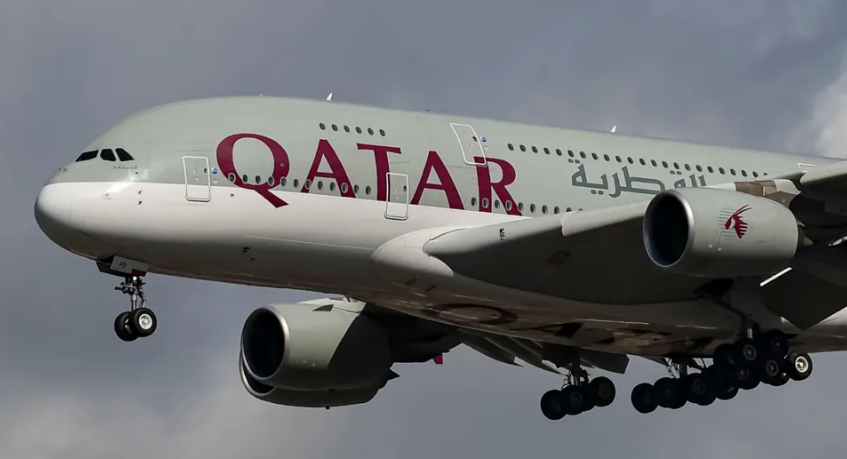
Flights across the Middle East were severely disrupted on Monday as escalating tensions between Israel and Iran prompted airlines to cancel or reroute routes, while major regional airports temporarily shut down operations.
Qatar’s Hamad International Airport in Doha, a critical global aviation hub, suspended all flights following a missile strike by Iran targeting a US military base within the country. The attack was launched in retaliation for recent American airstrikes on Iranian nuclear sites, intensifying a conflict that has now reverberated across international air travel networks.
Dubai International Airport, the world’s busiest by international passenger traffic, also experienced a temporary halt in operations, while passengers were warned to expect ongoing delays and cancellations. Abu Dhabi’s airport faced similar disruptions, as the UAE and Qatar both lie just across the Gulf from Iran.
The aviation shockwave extended far beyond the Middle East. Airlines including Air India, Japan Airlines, and several European and Gulf carriers cancelled dozens of flights. Air India said it was halting all operations to the Middle East as well as flights to the East Coast of North America and Europe due to safety concerns and airspace closures. Japan Airlines cancelled scheduled services between Tokyo and Doha.
US President Donald Trump has since announced a “complete and total” ceasefire between Israel and Iran on social media, but at the time of writing, neither Tehran nor Tel Aviv had officially confirmed the agreement.
For now, passengers remain stranded. “Hundreds of people are waiting for updates in lounges, some trying to get food or a place to sleep,” said Rob Liddle, a BBC journalist stuck in Doha en route to Bangladesh. “There was panic initially, but now people are mostly calm—just tired.”
Aviation experts warn the disruption may have ripple effects globally. “Air travel is a tightly interconnected system, so once one part collapses, the impact spreads fast,” said consultant Tim Atkinson. “Closure of Qatar’s airspace alone is a massive blow.”
According to John Strickland, director at aviation consultancy JLS, airlines may have to adopt longer, costlier flight routes. “They’ll burn more fuel, face crew scheduling issues, and experience mounting delays,” he explained. Safety concerns also remain paramount. Governments have issued advisories against travel to the region, and further cancellations are expected on a rolling basis.
The geopolitical crisis has shut large portions of airspace over Iran, Iraq, Lebanon, Syria, and Jordan—choking off a vital corridor between Europe and Asia. Normally, around 1,400 commercial flights use this route daily. Now, aircraft are being diverted north over Turkey or south via Saudi Arabia, placing additional pressure on already congested skies.
“This is one of the most serious disruptions to global aviation since the Ukraine war,” said Strickland. “And it’s unfolding in real time.”
