


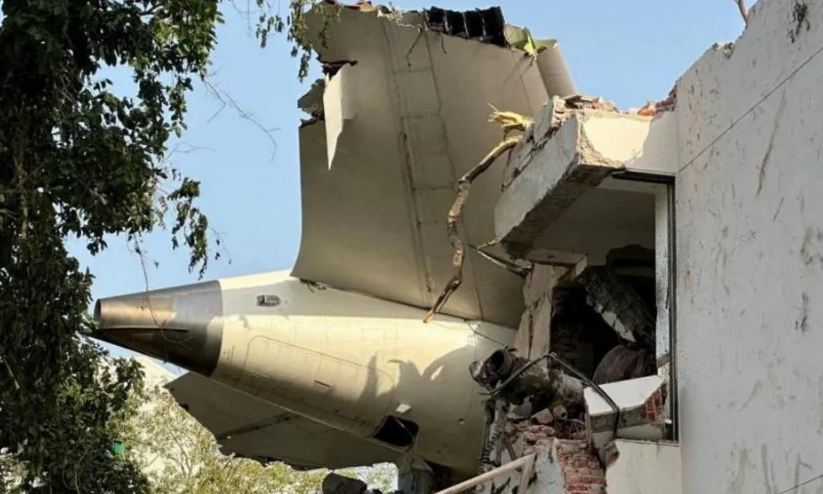
The U.S. Federal Aviation Administration (FAA) has defended the safety of fuel control switches used in Boeing aircraft, following their alleged involvement in the fatal Air India crash that killed 260 people last month.
The statement came after Indian investigators released a preliminary report on the June 21 crash of Air India Flight 171, a Boeing 787-8 Dreamliner bound for London. The aircraft plunged into a medical college near Ahmedabad airport less than a minute after take-off. It was one of the deadliest aviation disasters in nearly a decade.
According to the report, the jet’s engines lost thrust moments after take-off because the fuel control switches were found in the “cut-off” position, instead of “run.” This effectively halted fuel supply to the engines. The cause of this switch position change remains unclear, and the report stopped short of assigning fault or making safety recommendations.
The India Aircraft Accident Investigation Bureau (AAIB) noted that the switches’ locking feature — designed to prevent accidental movement — was disengaged. This follows a 2018 FAA advisory which recommended, but did not mandate, that airlines inspect the locking mechanisms on Boeing aircraft.
Air India had not performed such checks on its Dreamliner fleet, the AAIB said.
In an internal note shared with international aviation bodies and seen by the BBC, the FAA responded to the AAIB’s findings. It confirmed it had reviewed the preliminary report and reiterated that it does not view the issue as an unsafe condition requiring a formal airworthiness directive.
“Although the fuel control switch design, including the locking feature, is similar on various Boeing airplane models, the FAA does not consider this issue to be an unsafe condition,” the agency stated.
Air India’s CEO Campbell Wilson urged restraint in public reaction to the preliminary findings. In an email to staff, he criticised the “cycle of theories, allegations, rumours and sensational headlines” that had followed the crash, stressing that the report “has identified no cause for the accident, nor has it made any recommendations.”
Wilson also confirmed that no mechanical or maintenance faults had been found and that the aircraft had cleared all safety checks before take-off. As a precaution, Air India carried out additional inspections across its entire 787 fleet after the incident, with all aircraft deemed fit for service.
One British national was the sole survivor of the crash. A final report is expected within 12 months. In the meantime, investigators continue to analyse cockpit voice recordings and aircraft data to determine how the switches were flipped during flight.
