


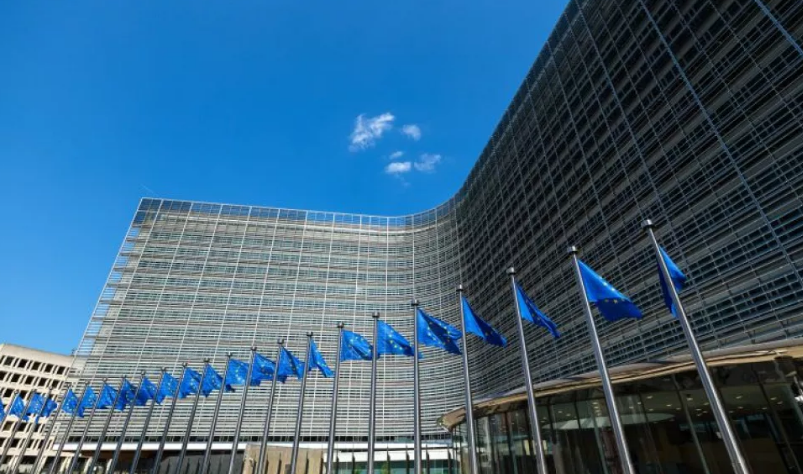
The European Commission on Saturday firmly denied allegations published in German media that it signed “secret contracts” with environmental non-governmental organizations (NGOs) to promote the bloc’s climate agenda.
The denial follows a report by German newspaper Welt am Sonntag, which claimed that the Commission paid up to €700,000 to prominent NGOs including ClientEarth and Friends of the Earth to lobby for EU climate policies. The newspaper cited contracts from 2022, alleging that ClientEarth received €350,000 to initiate legal challenges against German coal-fired power plants in an attempt to raise operators’ legal and financial risks. It also claimed that Friends of the Earth was encouraged to campaign against the Mercosur free trade agreement, even as other EU officials were negotiating the deal.
“Contrary to media allegations, there are no secret contracts between the European Commission and NGOs,” a Commission spokesperson told Euronews on Saturday. “The Commission exercises a high degree of transparency when it comes to providing funding to NGOs.”
The spokesperson emphasized that all funding to NGOs is governed by formal grant agreements and accompanying work programmes. “NGOs play a crucial role in shaping, monitoring, and enforcing legislation,” the Commission said, adding that NGOs are autonomous and free to express their own views on policy matters.
The issue of NGO funding has increasingly become politically sensitive in Brussels. The centre-right European People’s Party (EPP) has previously accused the Commission of indirectly instructing NGOs to lobby Members of the European Parliament (MEPs) in support of the EU Green Deal.
In January, Budget Commissioner Piotr Serafin admitted that certain contracts under the €5.4 billion LIFE programme may have crossed ethical boundaries by involving lobbying of specific MEPs. “It was inappropriate for some services in the Commission to enter into agreements that oblige NGOs to lobby members of the European Parliament specifically,” Serafin acknowledged. However, he defended the broader involvement of NGOs in EU policymaking.
A report by the European Court of Auditors (ECA) in April concluded that while the Commission’s funding procedures lacked transparency and posed reputational risks, no breaches of EU law or values were identified.
In response to ongoing concerns, the Commission says it has issued new guidelines to clarify funding processes and prevent overly targeted lobbying. “Further measures will be taken to strengthen transparency,” the spokesperson said, noting that all EU funding recipients and allocations are available on the Commission’s Financial Transparency System website.
