


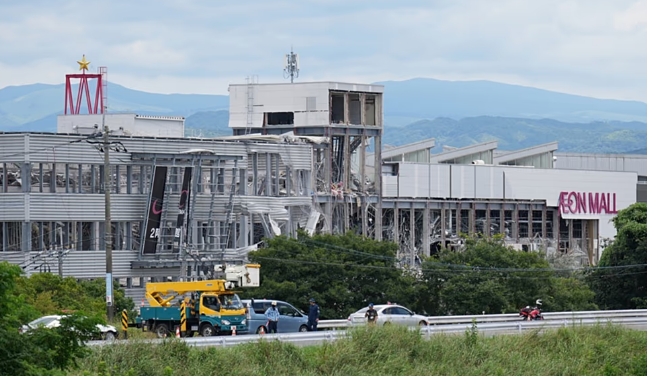
Rescue teams continued searching through collapsed buildings across Japan’s Kumamoto Prefecture on Wednesday after a powerful 7.1-magnitude earthquake killed at least 13 people and left dozens more trapped beneath the rubble, authorities said.
Prime Minister Sanae Takaichi confirmed the latest death toll and said emergency crews were working around the clock during the critical first 72 hours after the disaster, when the chances of finding survivors are highest.
“There are people who are still waiting to be rescued, and it’s a race against time,” Takaichi said. “We will go all out to find and rescue as many people as we can.”
The earthquake struck the Kumamoto area on the southern island of Kyushu late Tuesday afternoon, triggering widespread damage to homes, businesses and public infrastructure. Officials reported that many people remain missing as search operations continue across the hardest-hit communities.
Takaichi offered condolences to the families of those who lost their lives and said all available emergency response units had been deployed. She also urged residents to take precautions as Kumamoto experiences temperatures approaching 40 degrees Celsius during an ongoing heatwave.
The earthquake is the strongest to hit the region in a decade. In 2016, a series of powerful earthquakes, including a magnitude 7.0 tremor, killed 277 people and injured nearly 3,000 across Kumamoto Prefecture.
“The shaking reminded me of the Kumamoto quake 10 years ago and I was frightened,” said Hiroki Shimoda, an official at Mifune Town Hall, recalling how roof tiles fell from nearby homes during Tuesday’s quake.
Japan’s Self-Defense Forces joined firefighters, police officers and medical personnel in rescue operations. Troops helped search damaged buildings, transported injured residents to hospitals and delivered drinking water to affected communities.
One of the most serious incidents occurred at the Aeon Mall in Kashima Town, where the second floor collapsed, trapping people beneath the debris. Fire officials are also investigating reports that a gas leak may have caused an explosion at the site.
Emergency officials said a chimney collapsed at Nippon Paper Industries’ Yatsushiro factory, trapping several workers. Two survivors were rescued from the site, while the bodies of two victims were recovered. Authorities said seven people were still believed to be trapped as rescue efforts continued.
Hospitals across the region treated large numbers of injured residents. Local media reported that around 40 people were admitted to a hospital in Yatsushiro, while about 50 others received treatment at a hospital in Kumamoto City.
Authorities said nuclear facilities in the region did not suffer significant damage, adding that inspections found no abnormalities following the earthquake.
The disaster also disrupted transportation and industry. Aso Kumamoto Airport remained closed with no timetable announced for reopening. A train derailed and overturned at Yatsushiro Station, while sections of the historic Kumamoto Castle sustained fresh damage. Several manufacturers temporarily suspended operations on Tuesday, although many planned to resume production after inspections found no major structural problems.
Shinji Kiyomoto, director of earthquake and tsunami countermeasures at the Japan Meteorological Agency, warned residents to remain alert over the next two to three days because strong aftershocks remain possible. Emergency officials said rescue operations and damage assessments would continue as crews race to locate survivors trapped beneath collapsed structures.
