


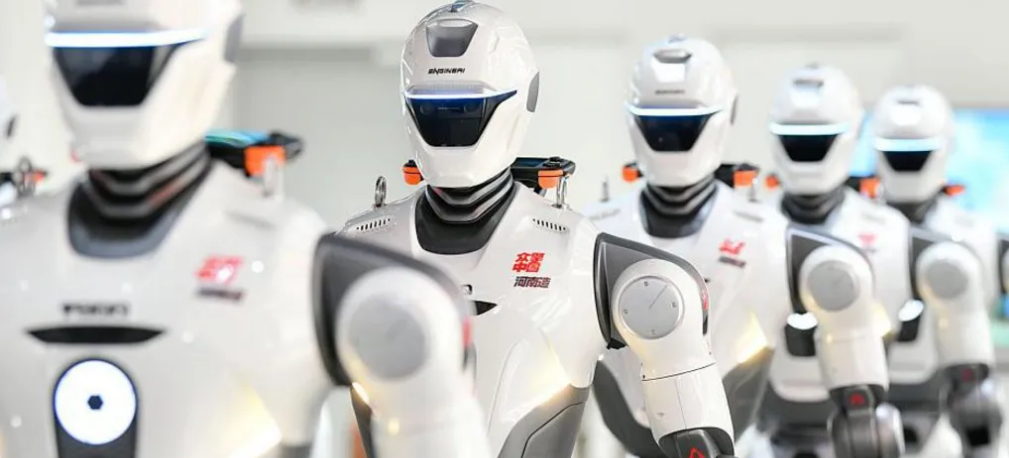
The Trump administration has announced a ban on new imports of foreign-made advanced robots and power inverters, saying the products pose unacceptable risks to US national security and critical infrastructure.
The measures, announced Tuesday by the Federal Communications Commission (FCC), apply to advanced robotic systems, including humanoid and four-legged robots, many of which are manufactured in China. The restrictions also cover power inverters used in data centers and solar energy systems.
The FCC said the affected products have been added to its Covered List, a register of communications equipment and technology considered to present national security risks.
The new rules apply only to future imports and do not affect robotic devices or power inverters that had already received FCC authorization before the announcement.
FCC Chairman Brendan Carr said the agency was taking steps to protect America’s critical supply chains from potential security threats.
According to the FCC, foreign-made power inverters could be exploited by overseas entities to disrupt energy systems, steal sensitive information, enable unauthorized remote access or support cyberattacks targeting critical infrastructure.
The agency also expressed concern that advanced robots manufactured outside the United States could be used by hostile actors to conduct surveillance, gather intelligence or even remotely control the machines.
The announcement comes as competition between the United States and China intensifies in robotics and artificial intelligence, with both countries investing heavily in emerging technologies viewed as strategically important.
China’s embassy in Washington criticized the decision, accusing the United States of politicizing trade issues and imposing sanctions based on what it described as unfounded allegations.
The embassy urged Washington to abandon what it called a hegemonic approach toward Chinese companies and said countries should cooperate to ensure artificial intelligence is developed for peaceful and beneficial purposes.
It also warned that Beijing would take all necessary measures to protect its interests if Chinese businesses were harmed by the new restrictions.
The latest move adds to a series of technology-related trade measures introduced by Washington in recent years. The United States has already restricted exports of advanced semiconductor technology to China, arguing the controls are necessary to safeguard national security, preserve its technological advantage and limit China’s military modernization.
US Treasury Secretary Scott Bessent has also warned that Chinese artificial intelligence companies could face sanctions over allegations that they misappropriated American intellectual property.
Chinese officials have rejected those accusations, maintaining that the country’s advances in artificial intelligence are the result of domestic research, investment and international cooperation.
The United States is also seeking to reduce dependence on Chinese technology following supply chain disruptions linked to Beijing’s tighter export controls on rare earth materials, which are essential for electronics and other advanced manufacturing industries.
Chinese robotics companies have rapidly expanded production of humanoid robots for factories, warehouses and household use, with firms introducing commercial products ahead of several American competitors, including Tesla and Boston Dynamics.
Industry analysts say the new restrictions could further reshape the global robotics market as governments increasingly treat advanced technology as a matter of national security as well as economic competition.
