


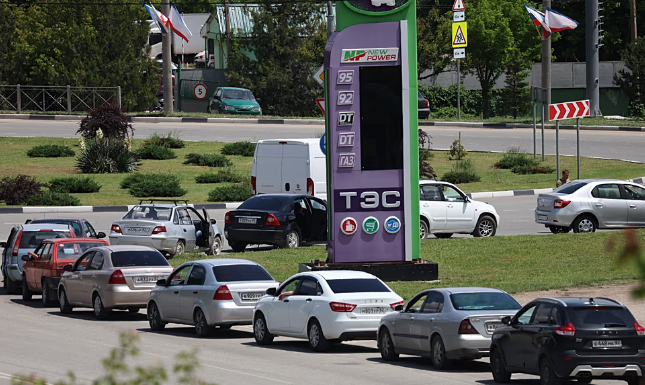
Russian-backed authorities in Crimea have suspended fuel sales to the public as Ukraine’s sustained attacks on energy infrastructure and supply routes continue to disrupt logistics across the occupied peninsula.
Sergey Aksyonov, the Moscow-installed governor of Crimea, said petrol stations will no longer serve individuals or businesses, with fuel now reserved exclusively for government agencies responsible for maintaining “functioning and security.” The move follows weeks of rationing caused by shortages linked to repeated Ukrainian strikes on supply lines into Russian-controlled territory.
Aksyonov said further decisions on fuel distribution would be announced later, as authorities attempt to stabilise a market that has been under increasing strain. Crimea, which Russia annexed in 2014, has faced mounting logistical pressure in recent months, but the latest restrictions represent the most severe limitation on public fuel access so far.
The announcement came after a reported Ukrainian drone strike on an oil depot in Kerch overnight, which local officials said killed four people and injured 28 others. Ukrainian President Volodymyr Zelenskyy described the attack as a “just response” to ongoing Russian strikes, arguing that Kyiv’s long-range operations are aimed at weakening Moscow’s military capacity.
Zelenskyy also said Ukrainian forces had struck a logistics facility used for oil transportation in Russia’s Krasnodar region, across the Kerch Strait from Crimea. Local authorities in the area reported that one person was killed in an attack on a passenger ferry. The Ukrainian president added that radar systems and other military logistics sites had also been targeted, though did not specify exact locations.
“Russia understands only strength, and our long-range strength is certainly working for peace,” Zelenskyy said in a statement posted on social media platform X.
Ukraine’s military leadership said at least seven people were killed in Russian attacks over the weekend, with more than 30 injured, including children. Meanwhile, Russia’s defence ministry claimed it had intercepted and destroyed 239 Ukrainian drones overnight, underscoring the scale of aerial operations on both sides.
Crimea remains a strategically significant hub for Russian military activity and a key launch point for operations into southern Ukraine. It is also a popular destination for Russian civilians, many of whom have reportedly faced fuel shortages affecting travel and daily life.
Both Kyiv and Moscow have intensified strikes on energy and logistics infrastructure in recent months as diplomatic efforts toward a ceasefire have stalled. Ukraine has focused on targeting Russian fuel networks to disrupt military supply chains and reduce revenue supporting the war effort, while Russia continues large-scale strikes across Ukrainian territory.
As the conflict expands deeper into infrastructure warfare, both sides face escalating disruption, with civilians increasingly caught in the consequences of prolonged attacks on energy and transport systems.
