


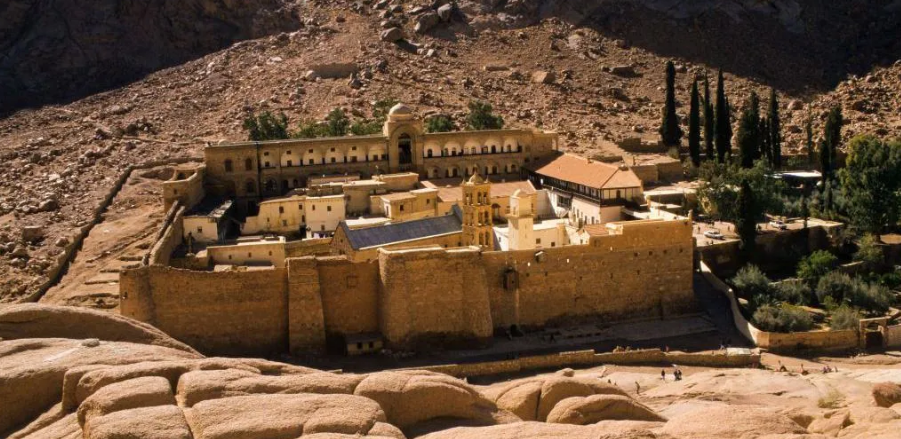
Mount Sinai, long revered by Jews, Christians, and Muslims as a place of divine revelation, is at the centre of a heated dispute as Egypt presses ahead with a massive tourism development.
Known locally as Jabal Musa, the mountain is believed by many to be the site where Moses received the Ten Commandments. It is also home to the sixth-century St Catherine’s Monastery, one of Christianity’s oldest surviving institutions, operated by the Greek Orthodox Church. The surrounding town, monastery, and mountain are together designated a UNESCO World Heritage site.
The Egyptian government launched its Great Transfiguration Project in 2021, touting it as “a gift to the world” aimed at boosting tourism, upgrading facilities, and modernising infrastructure. Plans include luxury hotels, eco-lodges, shopping areas, expanded airport access, and even a cable car to Mount Moses. Officials argue the development will enhance the visitor experience while preserving the area’s heritage and natural character.
Yet critics warn the project is eroding both the sacred and cultural identity of the region. Bedouin from the Jebeleya tribe—historically the guardians of St Catherine’s—say their homes and eco-camps have been demolished, sometimes without compensation. Graves have even been exhumed to make way for new construction. “This is not development as the Jebeleya see it,” said travel writer Ben Hoffler, who has worked closely with Sinai tribes. “It’s imposed from above, serving outsiders’ interests while marginalising the local community.”
The controversy has also strained relations between Egypt and Greece. An Egyptian court ruled earlier this year that the land surrounding St Catherine’s is state-owned, granting the monastery only the right of use. The decision prompted fierce backlash from Greek religious leaders. Archbishop Ieronymos II of Athens condemned it as a “seizure” of church property, while Archbishop Damianos of St Catherine’s called it a “grave blow” before stepping down amid internal disputes.
Greece and Egypt have since sought to calm tensions through a joint declaration reaffirming the monastery’s Greek Orthodox identity and heritage. Still, UNESCO has raised concerns, urging Cairo to halt construction and present a conservation plan. Campaigners, including World Heritage Watch, have gone further, calling for the site to be listed as a World Heritage Site in Danger.
Despite funding delays that have temporarily slowed progress, new roads and developments are already altering the Plain of el-Raha, where biblical tradition holds the Israelites once camped. Conservationists warn the unique blend of natural beauty and spiritual seclusion that defined the site for centuries is being lost.
Egypt, grappling with economic challenges and a struggling tourism sector, insists the project is vital to attract 30 million visitors annually by 2028. But for many locals and religious leaders, the transformation of Mount Sinai risks trading its sacred heritage for commercial gain—forever changing a site long regarded as a sanctuary of faith and peace.
