


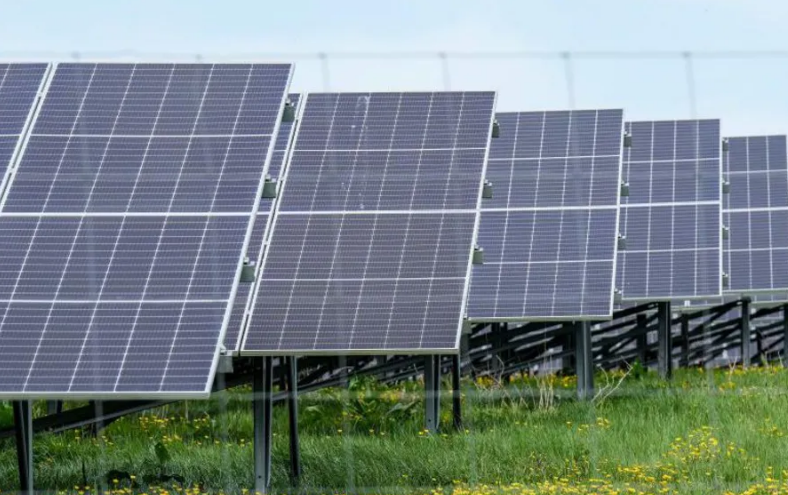
The UK government’s flagship renewable energy initiative, Great British Energy (GBE), is facing scrutiny after it was revealed that the first schools to benefit from its solar panel programme purchased equipment from Chinese manufacturers.
According to information obtained by the BBC through a Freedom of Information request, 11 schools involved in the initial rollout of GBE’s £200 million solar initiative sourced their panels from Aiko and Longi, two major Chinese firms. The revelation has sparked concern among MPs and human rights advocates over ethical sourcing and potential links to forced labour in China’s Xinjiang region.
Labour MP Sarah Champion, who chairs the International Development Select Committee, welcomed the vision of GBE but raised concerns over the origin of its first major procurement. “I’m really excited about the principle of GB Energy,” she said, “but it’s taxpayers’ money and we should not be supporting slave labour with that money.” She added that although UK-made panels may be more expensive, “wherever possible, we should be supporting good working practices and buy British if we can.”
China dominates the global solar panel industry, producing over 80% of components at every stage of the manufacturing process, including polysilicon—a key ingredient, roughly half of which comes from Xinjiang. Human rights organisations and Western governments, including the US, have linked Xinjiang’s polysilicon supply to forced labour involving the Uyghur Muslim population. China has denied all allegations of abuses.
Both Longi and Aiko have denied any involvement in unethical practices. They are members of the Solar Stewardship Initiative, which aims to promote responsible sourcing. Aiko stated it is “committed to upholding the highest standards of ethical business conduct,” while Longi reiterated that “forced labour has no place within our supply chain.”
GB Energy, a publicly owned company established by the Labour government to spearhead the UK’s renewable transition, insists all contracts comply with the UK’s Modern Slavery Act. A spokesperson for GBE said the company is “introducing a statutory duty to prevent modern slavery in its supply chains” and is working to improve transparency and accountability.
The issue highlights the broader challenge faced by countries seeking to expand renewable energy while maintaining ethical sourcing. In 2024, two-thirds of the UK’s solar panel imports came from China—a rise from 61% in 2023.
Experts warn that navigating the global solar supply chain without involving Chinese manufacturers may be difficult due to their overwhelming market dominance. However, industry voices like Mark Candlish of GB-Sol, the UK’s sole conventional solar panel manufacturer, argue that ethical concerns cannot be ignored. “The global solar market is so dominated by China that it is difficult to avoid buying Chinese,” he said, “but the risk of forced labour remains a key social issue.”
Despite these challenges, GBE maintains its commitment to building an ethical and sustainable energy future for the UK.
