


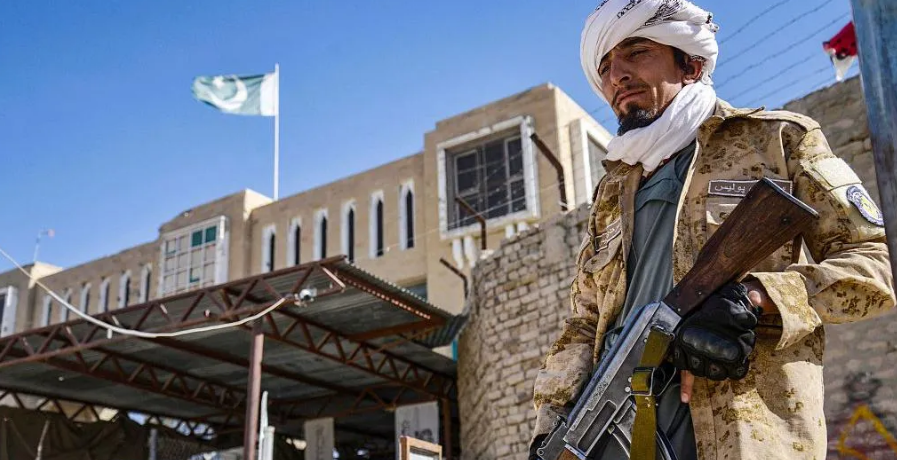
Violence flared along the Pakistan-Afghanistan border on Friday night, as both sides accused each other of violating a fragile ceasefire. Residents of Spin Boldak, a city near the 1,600-mile (2,600 km) border, fled overnight amid the exchange of fire.
Local authorities in Kandahar reported that four bodies were brought to hospitals, with another four people injured. Reports from Pakistan indicated that three people were wounded on its side of the border. The skirmishes lasted for approximately four hours, with both Islamabad and Kabul blaming the other for initiating the fighting.
Mosharraf Zaidi, a spokesperson for Pakistan’s Prime Minister Shehbaz Sharif, described the clashes as a result of “unprovoked firing” by Taliban forces. “An immediate, befitting and intense response has been given by our armed forces,” he said, adding that Pakistan remains vigilant to protect its territorial integrity and ensure civilian safety.
A Taliban spokesperson countered that Pakistan had “once again initiated attacks,” leaving the group no choice but to respond. Residents on the Afghan side reported that the shelling began around 22:30 local time (18:00 GMT). Footage from the area showed families fleeing in vehicles and on foot, while local officials claimed that civilian homes had been hit by mortar fire.
Ali Mohammed Haqmal, head of Kandahar’s information department, said that Pakistan’s forces had deployed “light and heavy artillery” during the clashes. The fighting comes less than two months after a ceasefire mediated by Qatar and Turkey temporarily halted a week-long bout of intense conflict, which marked the worst border clashes since the Taliban regained power in Afghanistan in 2021.
Tensions along the border have remained high, with Pakistan frequently accusing the Taliban of sheltering armed groups that launch attacks within Pakistani territory. The Taliban deny these claims, accusing Islamabad of deflecting responsibility for its own security challenges. According to the Armed Conflict Location & Event Data Project, the Pakistani Taliban have carried out at least 600 attacks on Pakistani forces over the past year.
Diplomatic efforts to stabilize the region have continued. Last week, delegations from both sides met in Saudi Arabia for the fourth round of negotiations on a broader peace settlement, but no agreement was reached. Sources close to the talks confirmed that both sides agreed to maintain the ceasefire, though the latest clashes highlight the fragility of the arrangement.
The recent outbreak of violence underscores the persistent instability along the Pakistan-Afghanistan border, where sporadic skirmishes have occurred over the past several months. Civilian populations remain particularly vulnerable as the two sides struggle to maintain a lasting truce while addressing long-standing security concerns.
