


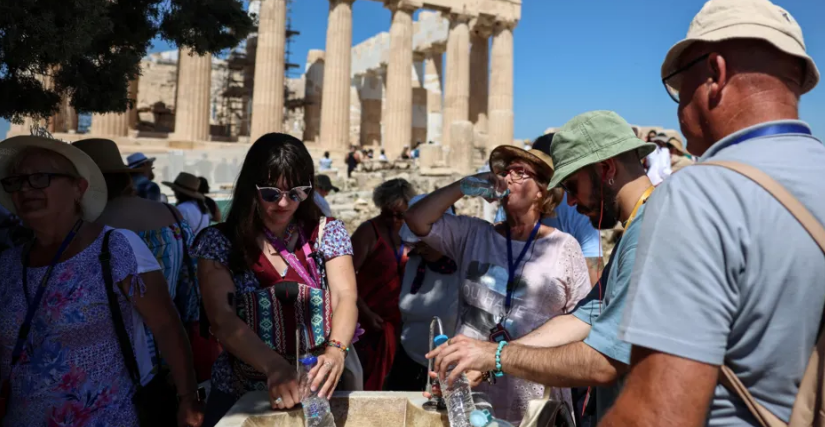
The Acropolis in Athens shut its gates to visitors on Tuesday afternoon as soaring temperatures and heightened wildfire risks continue to affect large parts of Greece. The decision, announced by the Ministry of Culture, temporarily suspended access to the ancient monument from 1:00pm to 5:00pm local time, citing concerns for the safety of both visitors and staff.
The closure comes as the country grapples with another intense heatwave, with temperatures in Athens expected to reach 38°C, and forecasts of up to 42°C in southern regions. The temporary shutdown follows similar measures taken in June and during last summer’s heatwave, reflecting a pattern of increasing weather-related disruptions at the popular site, which drew 4.5 million visitors in 2024 alone.
In addition to the Acropolis closure, the Ministry of Labour has mandated a five-hour work stoppage for all manual outdoor labourers between 12:00pm and 5:00pm in the worst-hit areas to protect workers from heat-related health risks.
The searing temperatures have also sparked a fresh wave of wildfires. According to the Greek Fire Service, 41 wildfires were reported on Monday alone, with seven still active by evening. A Category 4 wildfire alert — indicating a very high risk — was issued for five regions: Attica, the Peloponnese, Thessaly, central Greece, and western Greece. Civil Protection authorities have urged the public to remain on high alert.
Meanwhile, wildfires are also raging across parts of Europe. In southern France, more than 1,000 firefighters were deployed on Tuesday to contain a blaze near Narbonne, prompting evacuations and the closure of a key motorway between France and Spain. In Catalonia, Spain, over 2,000 people were under lockdown as firefighters battled a wildfire that erupted on Sunday in Tarragona province.
This wave of fires comes just weeks after western and southern Europe were hit by a deadly early summer heatwave, which resulted in mass evacuations and widespread property damage.
Experts warn that such extreme weather events are becoming increasingly frequent and intense due to human-induced climate change. The UN’s Intergovernmental Panel on Climate Change (IPCC) has repeatedly stated that rising global temperatures will make heatwaves more common and severe, with significant implications for public health, infrastructure, and heritage sites.
The Greek authorities say they will continue to adjust safety measures as the heatwave persists into Wednesday, with slight relief expected from Thursday onwards.
