


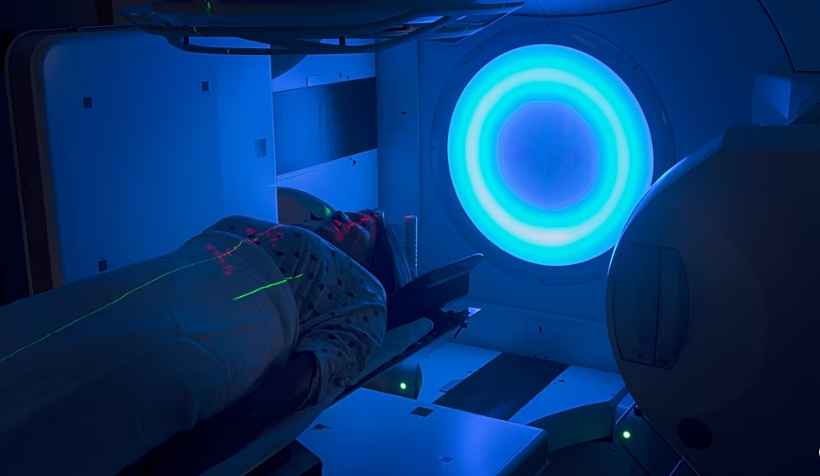
A major international study has found that radiation therapy does not significantly affect 10-year survival rates for women with early-stage breast cancer who are considered at “intermediate risk” of recurrence.
The findings, published Wednesday in the New England Journal of Medicine, suggest that many breast cancer patients may be able to safely avoid radiation treatment after mastectomy, reducing exposure to unnecessary side effects and treatment costs.
The clinical trial followed more than 1,600 women from the United Kingdom, seven European countries, Israel, and Türkiye who had undergone mastectomy, lymph-node surgery, and systemic treatments such as chemotherapy. Participants were classified as “intermediate risk,” meaning they either had stage II cancer with one to three affected lymph nodes or aggressive tumours with no lymph node involvement.
After nearly a decade of follow-up, researchers found that the 10-year survival rate was 81.4 percent for women who received radiation and 81.9 percent for those who did not—a nearly identical outcome. Only 29 patients experienced a recurrence, with nine (1.1 percent) in the radiation group and 20 (2.5 percent) in the non-radiation group.
“The findings potentially allow patients to avoid unnecessary treatments, leading to more effective and efficient use of health and care resources,” said John Simpson, head of a UK government group that evaluates clinical trials.
Radiation therapy has been a cornerstone of breast cancer treatment since the early 20th century, often used to destroy remaining cancer cells after surgery. However, the new results challenge the assumption that it remains essential for all patients following mastectomy. The authors said the evidence supports a growing shift away from routine radiotherapy for lower- and intermediate-risk cases.
They also noted that breast cancer mortality has declined significantly since the trial began, largely due to advances in systemic treatments such as targeted therapies and improved chemotherapy protocols. Projections for 2025 show breast cancer death rates continuing to fall across Europe, except among women over 80, where declines are only expected in the United Kingdom and Spain.
Dr Nicola Russell, a radiation oncologist at the Netherlands Cancer Institute and one of the study’s authors, said that avoiding unnecessary radiation can help patients recover more easily after surgery. “Avoiding unnecessary irradiation will reduce both treatment burden and, for example, the detrimental effects on breast reconstruction for these mastectomy patients,” she said.
Radiotherapy can cause a range of side effects, including swelling, soreness, and skin irritation similar to sunburn. In rare cases, it can lead to lung inflammation or nerve damage affecting the shoulders and arms. The study’s findings may now influence global treatment guidelines, offering many breast cancer patients the possibility of a less invasive recovery path.
