


UK researchers have developed a novel diamond-based sensor that could transform the way doctors track the spread of breast cancer, offering a safer and less invasive alternative to existing methods.
When breast cancer spreads, it often first reaches the lymph nodes near the tumour. Determining whether cancer has metastasised to these nodes is a critical step in treatment planning. Traditionally, doctors have relied on radioactive tracers or fluorescent dyes to identify affected nodes. However, these methods come with drawbacks: some patients are allergic to the dyes, while the use of radioactive materials requires specialised facilities and safety precautions that are not always available in hospitals.
The new technique, designed by scientists at the University of Warwick, uses tiny diamond sensors to trace the cancer’s route. Before or during surgery, doctors could inject a magnetic tracer fluid into the tumour. This liquid travels through the lymphatic system, mimicking the movement of cancer cells. The breakthrough lies in a diamond-tipped magnetic field sensor that can then detect the tracer inside the lymph nodes, allowing surgeons to identify which ones need removal.
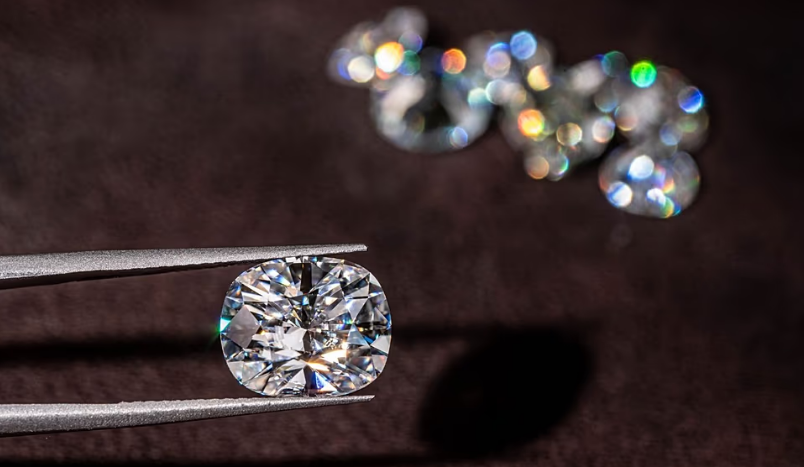
Diamonds contain unique properties known as nitrogen vacancy centres, or colour centres, that are highly sensitive to changes in magnetic fields. These centres not only make diamonds an effective detector but also give them a distinct pink hue. “These colour centres allow the diamond to detect very small changes in magnetic field and give the diamonds a lovely pink colour,” explained Professor Gavin Morley, a physicist at the University of Warwick and one of the study’s authors.
The Warwick team succeeded in miniaturising the sensor’s tip to just 10 millimetres, making it small enough for use in surgery while retaining the sensitivity needed to detect magnetic tracer fluids. This marks the first time a diamond-based sensor of this size has been capable of detecting the tracers, according to the study published in Physical Review Applied.
Importantly, the researchers stressed that their work did not receive financial support from Endomagnetics Ltd, the company that manufactures the magnetic tracer used in the experiments.
Experts in the field have welcomed the development. Dr Stuart Robertson, a breast cancer surgeon in England, noted that magnetic sensors are already widely used to assess whether breast cancer has spread. The diamond sensor, he said, could further “optimise magnetic technology” and improve surgical outcomes.
If proven effective in clinical settings, the diamond-based sensors could provide doctors with a safer, non-radioactive tool to guide treatment while sparing patients from potential side effects associated with current techniques. The innovation adds to the growing use of magnetic technologies in oncology, raising hopes for more precise and patient-friendly cancer care in the future.
