


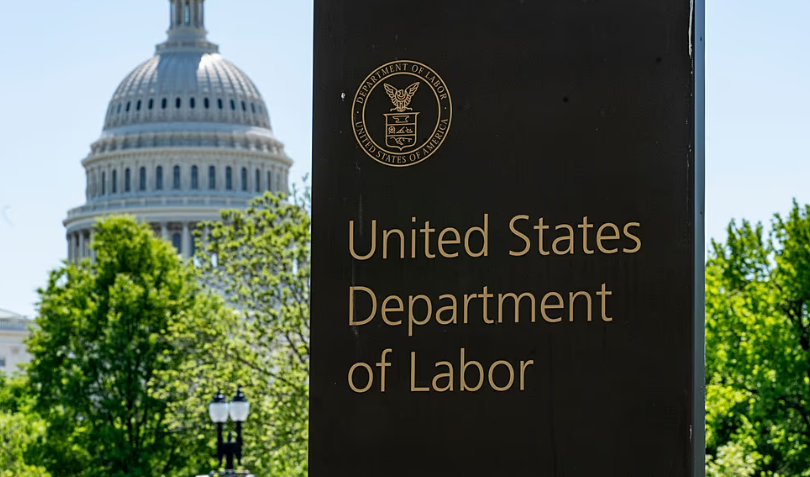
After a 43-day government shutdown delayed economic reporting, the Labor Department will release the September jobs report on Thursday, providing the last complete monthly update before the Federal Reserve’s December interest rate decision. Economists predict that US employers added 50,000 jobs in September, a modest improvement over August’s 22,000 but still reflective of a sluggish hiring trend. The unemployment rate is expected to have remained steady at 4.3%, according to a FactSet survey.
The delayed report comes after federal workers responsible for gathering employment data were furloughed during the shutdown, leaving investors, policymakers, and businesses without a clear picture of the labor market for several weeks. Analysts anticipate strong market reactions to the data, with volatility likely heightened because it is the most recent comprehensive snapshot of employment trends.
Labor market conditions this year have been affected by high interest rates, aimed at curbing the inflation spike of 2021-2022, and uncertainty surrounding trade policies, including President Donald Trump’s import tax proposals. Revisions to previous Labor Department data showed that the US economy created 911,000 fewer jobs than initially reported in the year ending in March, reducing average monthly job gains from 147,000 to 71,000. Since then, hiring has slowed further, averaging 53,000 new jobs per month, a sharp contrast to the post-COVID-19 hiring boom of 400,000 jobs per month during 2021-2023.
Some economists are cautiously optimistic about September’s numbers. Stephen Stanley, chief US economist at Santander, forecasts that employers may have added 75,000 jobs, slightly higher than the consensus. He notes that President Trump’s immigration policies, which reduce the number of new workers entering the labor market, could allow the economy to maintain a low unemployment rate even with slower job creation. Traditionally, the “breakeven” level for stable employment has been between 125,000 and 150,000 monthly hires, but with fewer workers entering the market, stability can persist with significantly lower monthly additions.
The September data will carry extra weight because the Labor Department will not release a full October report, citing the inability to calculate the unemployment rate during the shutdown. Instead, partial October data will be released alongside the full November report on December 16. This makes September’s figures the final full measure of employment conditions the Fed will review before its meeting on December 9-10, where officials may consider a third interest rate cut this year.
Economists emphasize that while hiring remains weak, layoffs have been limited, meaning that most Americans in employment continue to enjoy job security, even as those seeking work face challenges. The September jobs report will provide critical guidance for policymakers, investors, and businesses navigating a still-cautious US labor market.
