


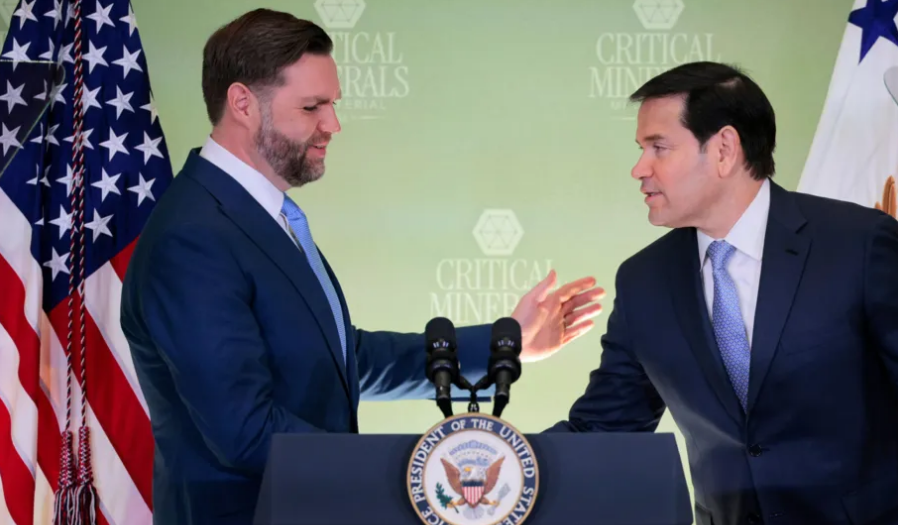
The United States has launched an initiative to establish a trade zone for critical minerals, a move aimed at reducing reliance on China for resources essential to electronics, electric vehicle batteries, and military equipment. The effort began with the first Critical Minerals Ministerial, hosted by the State Department on Wednesday.
The event brought together representatives from the United Kingdom, European Union, Japan, India, South Korea, Australia, and the Democratic Republic of Congo to discuss the availability and supply of minerals vital to high-tech industries. Rare earth elements, lithium, and other critical resources are key to manufacturing products ranging from smartphones to weapons systems.
China currently dominates the mining and processing of these minerals. While US officials avoided naming China directly, Vice President JD Vance referred to “foreign supply” flooding global markets, which makes it harder for countries with mineral deposits to secure financing for production.
The US intends to use tariffs to prevent prices from falling too low, which could discourage investment in domestic and allied mining operations, Vance said. David Copley, a special assistant to President Donald Trump, noted that the administration plans to “deploy hundreds of billions of capital into the mining sector to get projects going.” Investments have already been made in companies such as MP Materials, a rare earth magnet producer, and Lithium Americas, which supplies materials critical for rechargeable batteries.
US Trade Representative Jamieson Greer added that the US, Japan, and the European Commission are coordinating trade policies to avoid future supply disruptions and ensure access to essential minerals.
Ahead of the ministerial, a Chinese Foreign Ministry spokesperson urged nations to adhere to market principles and international trade rules, emphasizing dialogue and communication. China has tightened export controls on rare earths in recent months, requiring government approval before shipments abroad. While some restrictions were later eased, analysts say Beijing is using its market dominance as leverage in trade negotiations with Washington.
The ministerial coincided with President Trump announcing the creation of a $12 billion critical mineral reserve, known as “Project Vault,” on Monday. Industry leaders welcomed the move as a decisive step to secure US supply chains. Wade Senti, president of Advanced Magnet Lab, said, “It’s critical to see the United States take decisive steps to shore up our supply of all kinds of minerals and rare earths.”
The US initiative reflects growing concern over reliance on foreign suppliers for resources essential to both the economy and national security. By building a coordinated trade framework with allied countries and investing heavily in domestic production, Washington hopes to reduce vulnerability to supply disruptions and shift global leverage away from China.
The ministerial also coincided with a phone call between Trump and Chinese President Xi Jinping, which Trump described as “very positive,” highlighting ongoing efforts to balance cooperation with strategic competition in critical sectors.
