


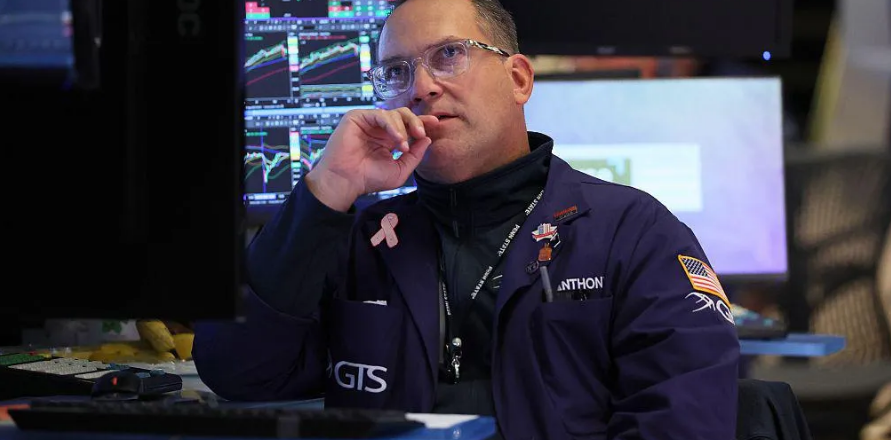
US financial markets have been hit by a fresh wave of anxiety this week, with concerns rippling from the banking sector to broader worries about overvalued stocks and geopolitical tensions.
The latest bout of unease began when two regional US banks warned of potential losses linked to alleged fraud, reigniting fears about the health of smaller lenders. The news followed earlier market turbulence driven by escalating tensions between Washington and Beijing over tariffs, advanced technology, and access to rare earth minerals.
In recent weeks, a string of corporate bankruptcies — including car parts maker First Brands and subprime auto lender Tricolor — have further unsettled investors. While major indexes such as the S&P 500 have declined by roughly 3% from their recent highs, analysts say the fluctuations remain within normal bounds. The S&P 500 is still up about 13% this year, maintaining steady gains despite the volatility.
“The market has done surprisingly well so far this year, driven by stronger corporate profits and enthusiasm surrounding new technologies,” said Sam Stovall, chief investment strategist at CFRA Research.
However, some analysts warn that the very resilience of the stock market could be a cause for concern. US share prices have risen much faster than profits, leading to fears that valuations may be overstretched. At the same time, speculation about a potential bubble in the booming artificial intelligence sector continues to grow, as major tech firms pour billions into competing AI ventures.
The Bank of England recently cautioned that markets were showing signs of “stretched valuations” and could face a “sharp correction.” Similar warnings have been echoed by JPMorgan Chase chief Jamie Dimon, Federal Reserve Chair Jerome Powell, and the International Monetary Fund (IMF), which noted that “markets appear complacent as the ground shifts” in its latest financial stability report.
James Reilley, senior markets economist at Capital Economics, said that while the recent sell-offs reflected investor sensitivity to risk, the rapid recovery also demonstrated underlying confidence. “The market’s quick rebound shows how fast concerns can fade once clarity returns,” he said.
Despite the turbulence, many analysts remain cautiously optimistic. Goldman Sachs and Wells Fargo have both raised their year-end targets for the S&P 500, while UBS Global Wealth Management’s David Lefkowitz expects the index to finish the year around 6,900 points — roughly 4% higher than current levels.
Lefkowitz said the overall banking system remains stable despite isolated cases of fraud and that the US economy’s solid growth and lower interest rates are helping sustain investor confidence.
“I’m not saying we’re in a bubble — but markets don’t fall for no reason,” he noted. “Corrections and downturns are part of the cycle — it’s just a matter of when.”
