


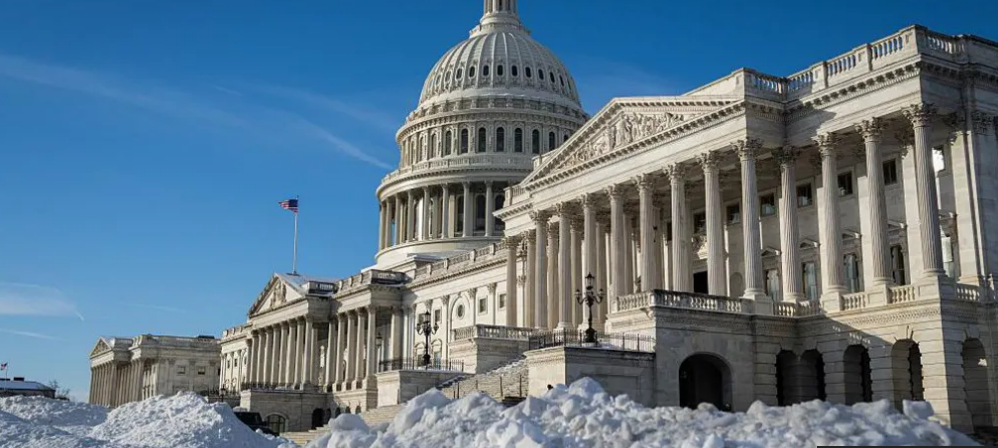
The US federal government entered a partial shutdown early Saturday after a last-minute funding deal approved by the Senate has yet to pass the House of Representatives. The lapse began at midnight Eastern Time (05:00 GMT), hours after senators agreed to fund most agencies until September. The legislation provides only two weeks’ funding for the Department of Homeland Security (DHS), which oversees immigration enforcement, leaving other agencies covered but creating uncertainty over short-term operations.
President Donald Trump struck the Senate-backed deal with Democrats after negotiations broke down over additional funding for immigration enforcement. The deadlock followed the fatal shooting of two US citizens in Minneapolis by federal immigration agents, an incident that intensified scrutiny over DHS practices.
This marks the second federal shutdown within a year, coming just 11 weeks after the previous record-length stoppage from October 1 to November 14, 2025. That shutdown disrupted essential services across the country, including air travel, and left hundreds of thousands of federal workers unpaid for weeks. Officials say the current shutdown is unlikely to last as long, as the House of Representatives, which holds the power to approve spending, is scheduled to return on Monday.
Despite the temporary nature of the shutdown, the White House has directed several federal agencies—including the departments of transportation, education, and defense—to begin executing shutdown plans. A memo to agency employees instructed them to report to work for “orderly shutdown activities” while noting the administration hopes the lapse will be brief.
Trump has urged House Republicans, who hold a majority, to pass the Senate deal quickly. Lawmakers plan to use the two-week DHS funding period to negotiate a broader agreement, with Democrats pushing for new oversight and rules for immigration enforcement.
“We need to rein in ICE and end the violence,” Senate Minority Leader Chuck Schumer said, referring to Immigration and Customs Enforcement. “That means ending roving patrols. It means requiring rules, oversight, and judicial warrants… Masks need to come off, cameras need to stay on, and officers need visible identification. No secret police.”
The shooting in Minneapolis that sparked the debate involved Alex Pretti, an intensive care nurse, who was shot by a US Border Patrol agent during an altercation with multiple officers. The Justice Department opened a civil rights investigation into the incident on Friday. Both Republican and Democratic lawmakers have criticized the tactics used by immigration agents following the deaths.
While most agencies will continue limited operations, the partial shutdown highlights ongoing partisan tensions over immigration enforcement and federal spending. Lawmakers now face pressure to reach a compromise quickly to avoid widespread disruption and prevent federal workers from facing unpaid leave once again.
