


Factories across India’s key export hubs are reeling under the impact of steep new US tariffs, with garment, jewellery and seafood industries among the hardest hit. Business owners and workers fear widespread job losses as President Donald Trump’s administration imposes a 50% duty on Indian goods beginning this week.
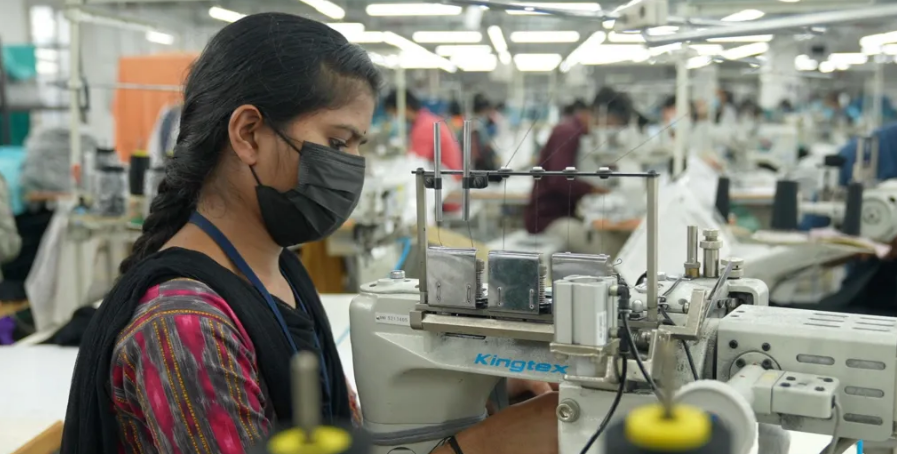
In Tiruppur, Tamil Nadu, a major centre for garment exports, factory floors that once hummed with activity now sit half-empty. At N. Krishnamurthy’s unit, only a handful of sewing machines are operating, completing the last of seasonal orders for American retailers. Stacks of fabric samples lie unused as buyers pause new contracts. “September onwards, there may be nothing left to do,” Krishnamurthy said, after shelving expansion plans and halting the hiring of 250 new workers.
Tiruppur accounts for nearly a third of India’s $16 billion ready-made garment exports to brands such as Walmart, Target, and Zara. But with tariffs raising the price of an Indian-made shirt to $16.40—costlier than competitors from China, Bangladesh, and Vietnam—buyers are expected to shift orders elsewhere.
The shock is rippling beyond textiles. In Mumbai, diamond exporters who rely heavily on the US market warn that even small increases in duties could wipe out their margins. Adil Kotwal of Creation Jewellery, which sends 90% of its products to American buyers, said: “Who can absorb these tariffs? Even US retailers will not be able to.”
Further north in Surat, the world’s largest diamond-polishing hub, demand was already slowing due to competition from lab-grown gems. Now, factories that once employed thousands are working only part-time. Units that previously polished 2,000 stones a month report output dropping to 300. “This place used to be buzzing,” said one worker in a dimly lit polishing unit, where rows of tables sit idle and many colleagues have been laid off.
Shrimp farmers are also struggling. India, one of the world’s largest suppliers, faces combined duties exceeding 60%. Prices have already fallen by up to 72 cents per kilo, and hatcheries report cutting production by nearly a third. “Trump’s tariffs caused great confusion,” said exporter Thota Jagadeesh. “We’re unable to make any decisions.”
The government has announced relief measures, such as suspending import duties on raw materials and pursuing trade diversification with the UK and Australia. Yet analysts warn these steps may not be enough. “We can expect US buyers to divert orders to Mexico, Vietnam, and Bangladesh,” said Ajay Srivastava of the Global Trade Research Initiative.
Meanwhile, trade talks with Washington have stalled amid rising tensions over India’s ties with Russia and China. With Christmas and New Year—critical export seasons—approaching, uncertainty looms large. For many exporters, survival may now hinge on domestic markets and festivals such as Diwali.
