


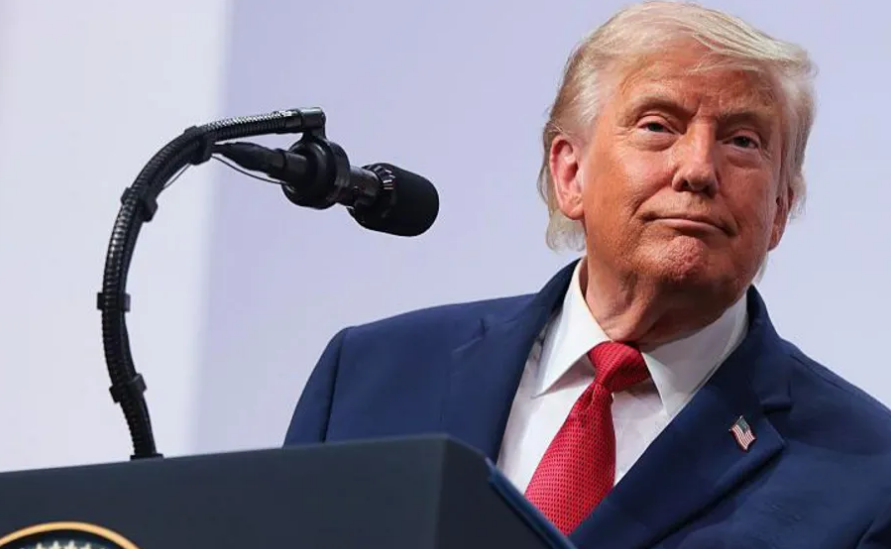
US President Donald Trump has ordered a federal investigation into major energy companies, accusing them of failing to pass on lower oil costs to consumers despite a sharp decline in global crude prices following recent geopolitical tensions.
Trump announced the move on social media, saying he had directed the US Department of Justice to immediately examine whether oil companies were unfairly keeping petrol prices elevated while benefiting from lower wholesale oil costs.
According to the president, the decline in oil prices has not been reflected quickly enough at fuel stations across the country. He argued that consumers should be seeing a more substantial reduction in petrol prices and suggested that companies may be taking advantage of the situation.
“The big oil companies are not dropping their price at the pump commensurate with the sharply lower prices they are paying for oil,” Trump wrote. He added that wholesale prices had fallen rapidly and claimed customers were being “gouged.”
The Department of Justice and the White House had not publicly provided additional details about the proposed investigation, and no specific companies were named in the president’s statement.
The issue comes after months of volatility in global energy markets linked to the conflict involving Iran, the United States and Israel. Oil prices surged after disruptions to shipping routes through the Strait of Hormuz, a key corridor for global energy supplies. Concerns over supply shortages pushed crude prices sharply higher during the height of the conflict.
Brent crude, the international benchmark for oil prices, climbed to nearly $120 a barrel in May as tensions escalated and trade flows were disrupted. Since then, prices have retreated as diplomatic efforts and peace negotiations eased concerns about supply interruptions.
On Wednesday, Brent crude traded below $76 a barrel, significantly lower than its wartime peak. However, prices remain above levels recorded before the conflict began, when Brent traded at around $70 a barrel.
A similar trend has been seen in the United States. West Texas Intermediate (WTI), the country’s benchmark crude grade, fell below $72 a barrel this week but remained above the approximately $60-a-barrel level seen before the outbreak of hostilities.
Fuel prices have also declined from recent highs. The average price of regular gasoline in the United States has dropped to roughly $3.93 per gallon after exceeding $4 per gallon in April, its highest level since 2022. Even so, prices remain noticeably above pre-conflict levels, fueling concerns among consumers and policymakers.
The debate mirrors discussions in other countries, including the United Kingdom, where fuel retailers faced scrutiny earlier this year over claims that pump prices were not falling in line with wholesale costs. British regulators later reported that there was no widespread evidence of excessive profiteering and said industry profit margins had remained largely stable.
Trump’s call for an investigation signals growing political pressure on energy companies as consumers continue to feel the impact of higher fuel costs despite the recent easing in global oil markets.
