


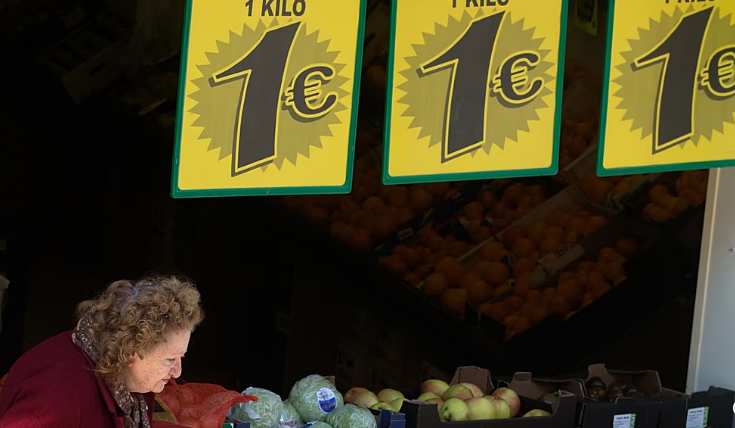
Spain’s annual inflation rate climbed to 3.4 per cent in March, driven largely by rising energy prices linked to ongoing tensions in the Middle East, according to official data released on Tuesday.
Figures confirmed by the National Statistics Institute showed a notable increase from February’s 2.3 per cent reading, marking a jump of 1.1 percentage points. The latest figure was also slightly higher than the preliminary estimate published at the end of March.
The rise reflects growing pressure on household costs, particularly from fuel and electricity, as global energy markets remain volatile due to the conflict. Core inflation, which excludes energy and fresh food, also edged higher to 2.7 per cent, indicating broader price increases across the economy.
Spain’s Harmonised Index of Consumer Prices (HICP), used for comparisons across the eurozone, matched the headline rate at 3.4 per cent year-on-year, up from 2.5 per cent in February. Analysts say the data highlights how external shocks are feeding into domestic prices.
Transport costs were among the biggest contributors to the increase, rising 5.3 per cent compared to a year earlier as fuel and lubricant prices surged. Housing costs also accelerated, increasing by 3.7 per cent, with electricity and liquid fuels playing a key role.
Seasonal factors added to the pressure, with clothing and footwear prices rising 2.6 per cent year-on-year. The increase reflects the launch of spring and summer collections, which typically push prices higher during this period.
Regional data showed variations across the country. The Community of Madrid recorded the highest inflation rate at 4.1 per cent, followed by Galicia at 3.8 per cent and Castilla-La Mancha at 3.7 per cent. The lowest rates were seen in Ceuta and Melilla, both at 2.7 per cent.
Despite the uptick, the Spanish government expressed confidence that recently approved measures will help ease inflation in the coming months. Officials pointed to an anti-crisis package passed by parliament at the end of March, which includes fiscal steps aimed at limiting the impact of higher fuel costs.
The Ministry of Economy said early signs suggest these measures are beginning to take effect, particularly at petrol stations. However, it acknowledged that international energy prices continue to exert upward pressure.
Authorities also highlighted the role of electricity in cushioning the impact of the energy shock. Spain’s investment in renewable energy has helped reduce dependence on external sources, providing some protection against global price swings.
Economists warn that inflation trends will remain closely tied to developments in energy markets, especially as the Middle East conflict continues to influence oil and gas prices.
The latest figures underline the challenges facing policymakers as they attempt to balance rising costs with efforts to sustain economic growth.
