


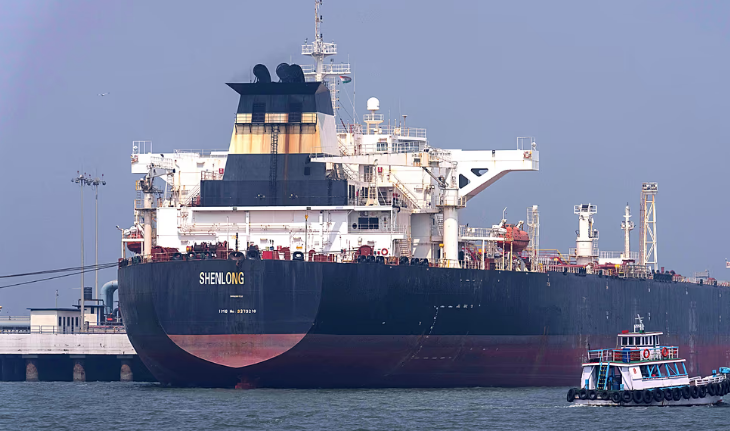
Surging insurance costs and tighter control over transit in the Strait of Hormuz are forcing shipowners to rethink voyages, with access increasingly shaped by risk, cost, and coordination.
Ships attempting passage through the narrow waterway, a crucial artery for global oil shipments, now face greater hurdles as rising risks and escalating war risk insurance premiums change how traffic moves through the strait. Vessels must increasingly coordinate with Iranian authorities to gain clearance. Access is no longer straightforward for many operators.
On Tuesday, Thailand reported that one of its oil tankers, owned by Bangchak Corporation, successfully transited the strait after discussions with Iranian officials. A second vessel remains waiting for clearance, alongside other ships seeking safe passage.
Recent attacks and ongoing uncertainty have left shipowners weighing whether to enter the waterway at all. War risk insurance costs have surged sharply since the conflict escalated on February 28. David Osler, finance editor at Lloyd’s List, said, “Before the fighting, the typical rates for the Strait of Hormuz were 0.15% to 0.25% of hull value for a one-week policy. Since the conflict began, quotes are as high as 5% to 10% of hull value.”
For a very large crude carrier valued at around $100 million (€90 million), that translates to several million euros in additional costs for a single transit. Insurance remains available but often at rates that make transits economically challenging. Osler added, “If they want to make the trip – and can find a crew that will agree to do the job – they are not being held back by lack of insurance. Decisions are being driven largely by safety concerns.”
Maritime specialist Mustapha Zehhaf said some shipping companies are avoiding the strait entirely, while those that do transit are adjusting their routes, sometimes sailing closer to the Iranian coast to reduce exposure.
Few alternatives exist for moving energy exports. Pipelines such as Saudi Arabia’s East-West route and the UAE’s Fujairah line can bypass the strait to some extent, but most global shipments still rely on Hormuz. The combination of higher insurance premiums and security risks has prompted energy analysts to warn of a potential supply shock.
Bill Farren-Price, head of the gas programme at the Oxford Institute for Energy Studies, said, “Prices are expected to rise as supply tightens and shortages begin to feed through, before higher costs start to curb demand. Much worse — this was always the Armageddon scenario.” He added that there is no realistic military solution to fully secure the strait and little indication of a near-term diplomatic resolution.
The developments highlight the fragile balance of global energy transport, where safety, cost, and geopolitics now dictate the flow of oil through one of the world’s most strategically vital waterways.
