


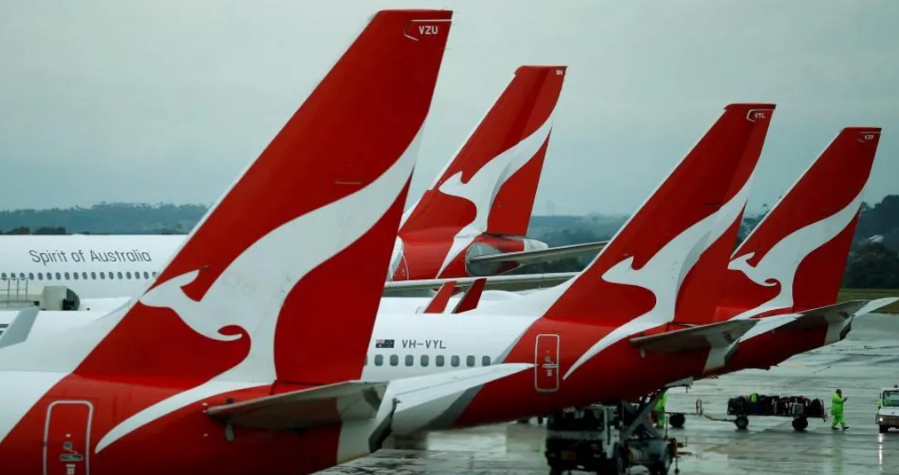
Australia’s national carrier Qantas has been hit with a record A$90 million (£43m; $59m) fine for illegally sacking more than 1,800 ground workers during the height of the Covid-19 pandemic. The ruling, handed down by the Federal Court, marks the largest penalty ever imposed under the country’s industrial relations laws.
Justice Michael Lee, who presided over the case, said the penalty was intended to serve as “real deterrence” to other employers who might consider breaking workplace laws for financial gain. He also questioned Qantas’ corporate culture, noting the airline’s “unrelenting and aggressive” legal tactics and casting doubt on whether its public apologies reflected genuine remorse.
The case stems from Qantas’ decision in 2020 to outsource its ground operations staff, including baggage handlers and cleaners, at a time when the aviation industry was severely disrupted by global travel restrictions. The airline had argued the move was necessary to cut costs, but unions accused the company of deliberately undermining workers’ rights.
The Transport Workers’ Union (TWU), which brought the lawsuit, welcomed the outcome. In a statement, the union described the ruling as the “end of a David and Goliath five-year battle” and a moment of justice for workers who had devoted their careers to the airline.
Of the total penalty, A$50 million will be paid directly to the TWU. This comes on top of A$120 million in compensation that Qantas agreed earlier this year to pay former employees after losing multiple appeals.
Qantas, in its response, said it accepted the judgment and would not contest the fine. “We sincerely apologise to each and every one of the 1,820 ground handling employees and to their families who suffered as a result,” said Vanessa Hudson, chief executive of Qantas Group. She acknowledged that the decision to outsource “caused genuine hardship” but insisted it had been made during an unprecedented crisis for the industry.
Despite the scale of the fine, some legal experts cautioned that the penalty may not go far enough. Dan Trindade, an employment law specialist at Clayton Utz, noted that Qantas may still have saved more money by outsourcing its workforce than it will lose from paying the penalties. “If it’s not seen as sufficient deterrence, the government may face calls to increase penalties,” he said.
The ruling is the latest in a string of scandals to hit the airline. Last year, Qantas was ordered to pay A$100 million after selling tickets for thousands of flights it had already cancelled.
For many observers, the landmark judgment not only underscores the rights of workers during times of crisis but also signals a broader warning to corporations that cost-cutting at the expense of lawful conduct will carry heavy consequences.
