


Multinational drugmakers are pausing or pulling back investments in the United Kingdom, citing concerns over uncompetitive drug pricing and strained relations with the government. The slowdown comes as Britain seeks to position itself as a hub for life sciences, a sector the government has long promoted as central to its post-Brexit economic strategy.
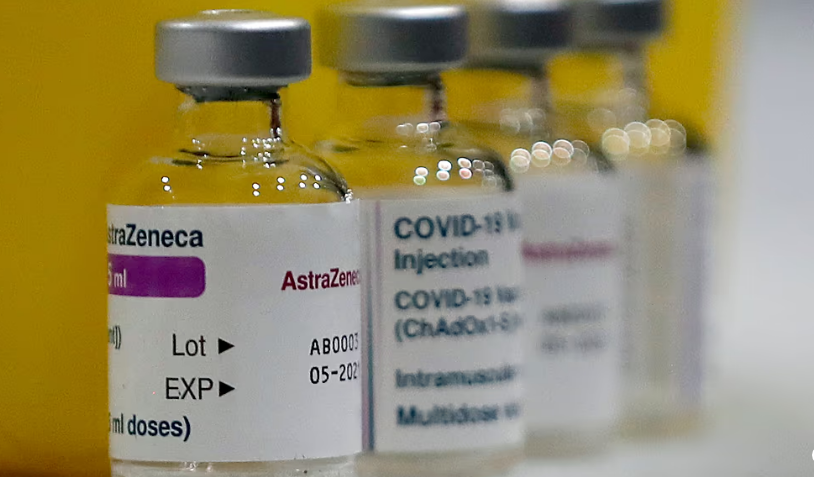
Eli Lilly, AstraZeneca, and Merck are among the companies that have recently scaled back or halted projects in the UK. Earlier this month, AstraZeneca suspended a planned £200 million expansion of its Cambridge research site, following the cancellation of a vaccine project in Liverpool. Merck, known in Europe as MSD, said it would relocate its London research operations to the United States. Meanwhile, Eli Lilly has paused its £279 million London Gateway Lab, saying it was awaiting “more clarity around the UK life sciences environment.”
The moves follow sharp criticism from Eli Lilly’s chief executive Dave Ricks, who last week told the Financial Times that Britain was “probably the worst country in Europe” for drug pricing. His remarks have further highlighted growing friction between the pharmaceutical industry and the government.
Richard Torbett, chief executive of the Association of the British Pharmaceutical Industry (ABPI), urged ministers to act. “We have a long and proud history of researching and manufacturing medicines in this country,” he said. “This is why we urge the government to improve how this country values and attracts future life sciences manufacturing.”
The UK spends a smaller share of its health budget on medicines than most developed nations — around 9% compared with 14–20% elsewhere. Much of this is due to the NHS’s heavy use of generic drugs and the role of the National Institute for Health and Care Excellence (NICE), which determines whether branded medicines are cost-effective. In addition, the Voluntary Scheme for Branded Medicines Pricing, Access and Growth (VPAG) caps NHS spending on branded medicines, requiring firms to pay back revenue when expenditure exceeds agreed limits. Companies argue the rebates have become unsustainable.
Adding to the pressure, new U.S. trade policies are reshaping the global market. President Donald Trump recently announced 100% tariffs on branded drug imports unless firms build plants in the U.S., alongside a “most favoured nation” pricing policy that could ripple across Europe. With the U.S. accounting for roughly 70% of global pharma profits, analysts say many companies are prioritising American operations over European ones.
Experts note that higher UK drug prices are not necessarily the solution. Irene Papanicolas, director at the Brown University School of Public Health, argued that if pharma firms retreat, “the bigger impact is on the economy and jobs” rather than patient access to medicines. Beth Woods, senior research fellow at the University of York, added: “Our research supports more stringent price regulation in the UK. More investment could fund screening programmes, hip replacements, or staffing increases.”
Analysts say that beyond pricing, the UK must strengthen its tax incentives, infrastructure, and research funding to remain attractive. Without decisive action, they warn, Britain risks losing ground in the global competition for pharmaceutical investment.
