


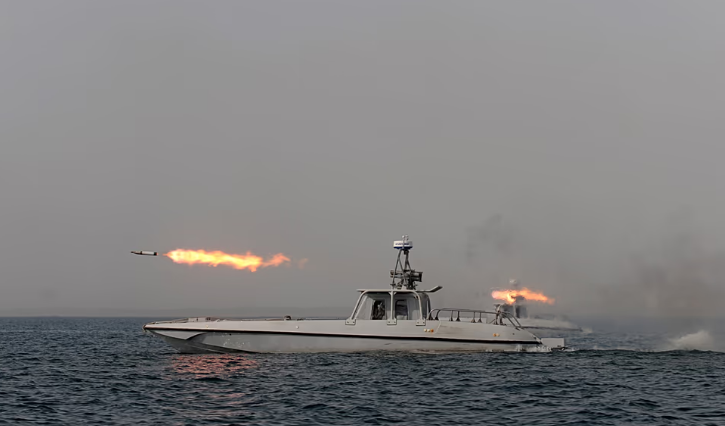
An oil tanker was attacked off the coast of Musandam in the Strait of Hormuz. Four people were injured and all 20 crew members were evacuated, according to Oman’s Maritime Security Centre. The attack marked the first reported incident against a ship in the strategic waterway on Sunday morning.
Oman authorities said the vessel, Skylight, flying the flag of the Republic of Palau, was targeted around five nautical miles (9.26 km) north of Khasab Port. The tanker’s 20-member crew included 15 Indian nationals and five Iranian nationals, all of whom were safely evacuated. The four injured crew members were transferred for medical treatment.
It has not been specified who attacked the tanker or what weapon was used, but the incident came after Iran’s Islamic Revolutionary Guard Corps (IRGC) declared the Strait of Hormuz closed to international navigation on Saturday, following US and Israeli strikes on Iran that killed Supreme Leader Ayatollah Ali Khamenei. While Tehran has not formally announced a full blockade, the IRGC’s warnings have caused immediate disruption to shipping. Vessels have been forced to hold outside the Gulf of Oman or turn back mid-transit.
The Skylight is reportedly under US sanctions. Oman authorities also reported a drone attack targeting the port of Duqm, with the country currently serving as a mediator between Tehran and Washington in recent nuclear talks.
Major shipping companies have responded by suspending operations through the Strait. Danish shipping giant Maersk announced on Sunday that all future transits would be halted until further notice. Marine insurers have also suspended coverage for voyages in the area, exposing operators to high risk premiums or outright refusal to provide insurance. Ships such as the very large crude carrier KHK Empress, carrying Omani crude, and the Indian-flagged Desh Abhimaan have already turned back.
The disruptions have sent shockwaves through global oil markets. Oil futures reopened Sunday evening amid speculation that Brent crude could reach $100 per barrel, a level last seen following Russia’s invasion of Ukraine in 2022. Analysts at Barclays and other firms warned that a prolonged shutdown could block up to 20 million barrels per day, representing around 20% of global supply.
In response, eight OPEC+ countries—Saudi Arabia, Russia, Iraq, UAE, Kuwait, Kazakhstan, Algeria, and Oman—held a virtual meeting to review market conditions. They announced a modest output increase of 206,000 barrels per day starting in April and confirmed that monthly meetings would be held to monitor market developments, with the next session scheduled for April 5.
No direct Iranian naval blockade has been implemented yet, but the combination of threatened closures, suspended shipping, and halted insurance has created extreme volatility. Ship tracking monitors show most traffic stalled on either side of the Strait, leaving markets highly sensitive to any further escalation or de-escalation in the region.
