


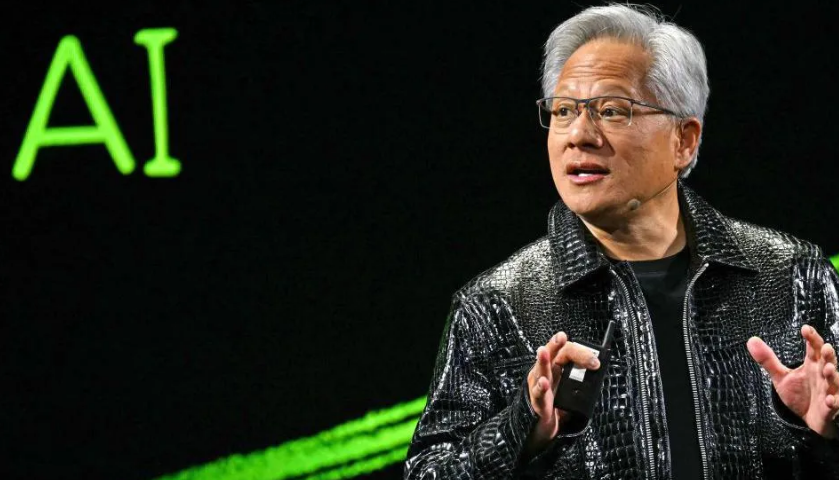
Nvidia has reported another quarter of strong growth, with soaring demand for its chips powering the global artificial intelligence boom, even as the company grapples with ongoing US-China trade tensions.
The California-based chip designer announced on Wednesday that revenue for the three months to July reached $46.7 billion (£34.6 billion), a 56% increase compared to the same period last year. Nvidia forecast that sales in the current quarter would rise further, to $54 billion, surpassing Wall Street expectations.
The surge in demand has been driven largely by technology giants including Meta and OpenAI, which rely heavily on Nvidia’s advanced chips to build and expand AI platforms. “The AI race is now on,” Nvidia chief executive Jensen Huang told analysts, noting that annual spending from four major technology firms had doubled to $600 billion. “Our contribution is a large part of the AI infrastructure, which over time will help accelerate GDP growth,” he added.
Despite its strong performance, Nvidia’s shares dipped in after-hours trading after its data centre division, which accounts for the bulk of its revenue, fell slightly short of market forecasts. Revenue from data centres jumped 56% to $41.1 billion, but some investors had expected more robust numbers.
Eileen Burbidge, founding partner at Passion Capital, said the wobble reflected “results not as strong as hoped in the data centre business,” but stressed that the company’s expansion had still been “unbelievable.” She added that recent market enthusiasm suggested “maybe too much exuberance or a bit of a bubble.”
Nvidia’s reliance on sales to major technology firms leaves it vulnerable to shifts in corporate spending. Colleen McHugh, chief investment officer at Wealthify, said Nvidia remained “at the heart of this AI boom,” but cautioned that its fortunes were “very reliant on the tech giants continuing to invest at current levels.”
The company also continues to face significant political and regulatory headwinds. In July, Nvidia said it would resume sales of its high-end H20 chips in China, after lobbying the Trump administration to ease restrictions imposed over concerns the hardware could benefit China’s military. However, US officials began reviewing export licenses again in late July, and Nvidia confirmed that no shipments of H20 chips had yet taken place.
The US government is expected to take a 15% share of revenue generated from licensed H20 sales. Nvidia is also pushing for approval to sell its Blackwell chips to Chinese customers, while analysts warn that Beijing’s drive to develop domestic alternatives could create longer-term competition.
“US export restrictions are fuelling domestic chipmaking in China,” said Emarketer analyst Jacob Bourne, who suggested Nvidia’s growing interest in robotics may help it maintain its dominance as “the bellwether of the AI economy.”
Nvidia’s meteoric rise has already made it the world’s first $4 trillion company, underlining its central role in the rapid expansion of artificial intelligence worldwide.
