


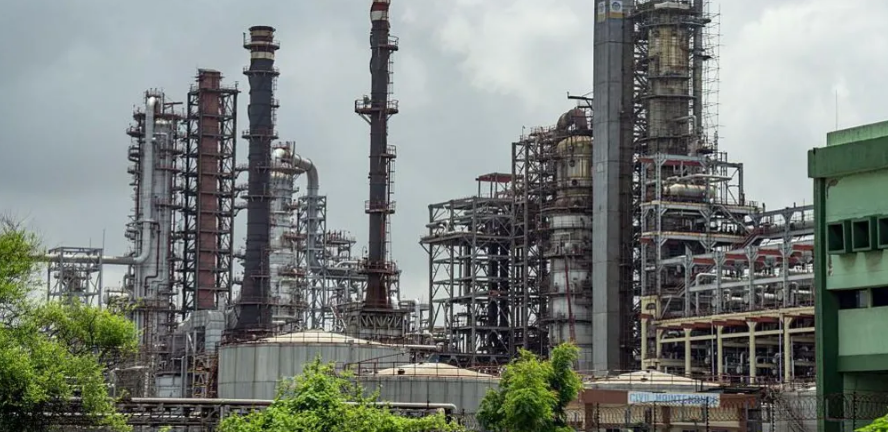
India has reaffirmed its commitment to securing affordable energy supplies, with its envoy to Moscow stating that the country will continue purchasing oil from the most economical sources available, including Russia.
“India will buy oil from wherever it gets the best deal in order to protect the interests of its 1.4 billion people,” Ambassador Vinay Kumar told Russia’s TASS news agency on Sunday. His remarks come just days before a new wave of US tariffs on India is set to take effect, raising tensions between New Delhi and Washington.
The administration of US President Donald Trump is preparing to impose a 50% tariff on Indian goods, including a 25% penalty linked to purchases of Russian oil and weapons. US Vice-President JD Vance said the measures, described as “secondary tariffs,” are intended to exert “aggressive economic leverage” on Russia and pressure Moscow to end its war in Ukraine.
India has dramatically increased imports of discounted Russian crude since the conflict began, with Russian oil accounting for as much as 40% of its imports in 2024—up from just 3% in 2021. Washington has accused New Delhi of indirectly helping to fund Moscow’s war effort, a charge Indian officials firmly reject.
Kumar dismissed the tariffs as “unfair, unreasonable and unjustified,” stressing that India’s trade policy is driven by market factors and its need to ensure energy security for its population. His comments followed similar remarks from Foreign Minister S. Jaishankar, who on Saturday criticized the US stance as contradictory.
“It’s ironic to have a pro-business American administration accusing others of doing business,” Jaishankar said, noting that neither China, the largest buyer of Russian oil, nor the European Union, which continues trading with Moscow, has been subjected to such tariffs.
India’s position highlights its determination to maintain strategic autonomy in foreign policy. Despite pressure from Washington, New Delhi has signaled it will not bow to demands to reduce Russian oil imports. While India has cultivated strong ties with both Ukraine and Russia, it has avoided publicly condemning Moscow, instead consistently calling for a “peaceful resolution through dialogue and diplomacy.”
Prime Minister Narendra Modi visited Ukraine in 2024, reiterating India’s readiness to “contribute in all possible ways” to restore peace. Ukraine’s ambassador in New Delhi, Oleksandr Polishchuk, told local media on Sunday that President Volodymyr Zelensky may soon visit India, though dates are yet to be confirmed. Russian President Vladimir Putin is also expected to travel to India later this year.
Meanwhile, Vice-President Vance defended Trump’s strategy, arguing that Russia could be reintegrated into the global economy if it ends hostilities. “But they are going to continue to be isolated if they don’t stop the killing,” he said.
With the tariffs looming, India’s insistence on prioritizing its energy needs underscores a growing rift with Washington—one that could complicate already fragile trade negotiations and reshape its global partnerships.
