


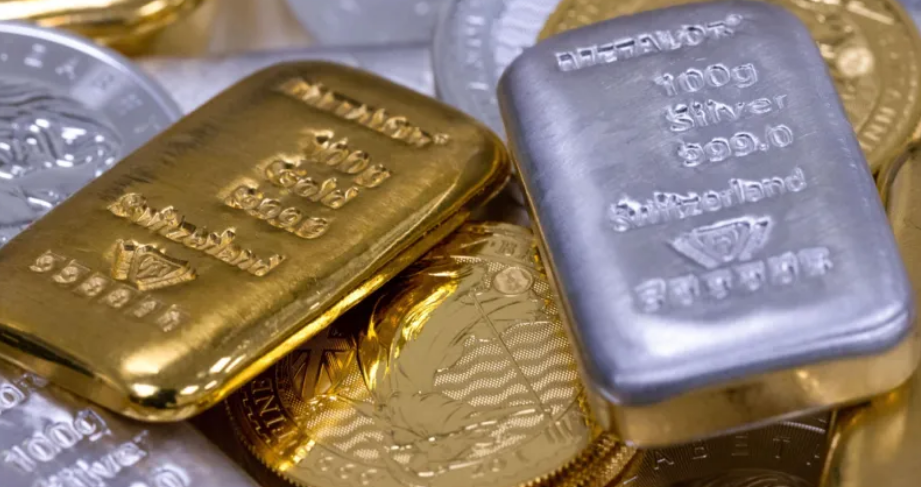
Gold and silver have ended 2025 with dramatic price swings, marking their largest annual gains since 1979. Gold soared more than 60% over the year, reaching a record high of $4,549 (£3,378) an ounce before easing after Christmas to about $4,330 on New Year’s Eve. Silver also hit record levels, trading at $71 an ounce after peaking at $83.62 on Monday.
The surge in precious metal prices this year was driven by expectations of further US interest rate cuts, central bank purchases, and investor demand for safe-haven assets amid economic and geopolitical uncertainty. “Gold and silver prices are experiencing a notable rise due to the interplay of several economic, investment, and geopolitical factors,” said Rania Gule from trading platform XS.com. She added that the main driver for the increase is anticipation that the US Federal Reserve will cut interest rates in 2026.
Investors also turned to precious metals in response to inflation concerns and volatile stock markets. Dan Coatsworth, head of markets at investment platform AJ Bell, said the rise in gold and silver reflects a broader search for stability. “The market backdrop looks unchanged as we move into 2026,” he said, citing high government debt in the UK and US, tariffs imposed by Donald Trump, and worries about a potential AI bubble as factors encouraging continued investor interest in metals.
However, experts warned that the sharp gains of 2025 make gold and silver vulnerable to corrections in the year ahead. Coatsworth noted that if financial markets face turbulence, investors may liquidate assets that performed strongly in the past year, with gold likely to be among the first sold.
Despite these warnings, analysts expect prices to remain elevated. Gule said gold may continue to rise in 2026, “but at a more stable pace compared to the record highs observed in 2025.” Silver, supported by industrial demand and limited supply, could also see further gains, although volatility is likely. Daniel Takieddine, co-founder of investment firm Sky Links Capital Group, highlighted China’s restrictions on silver exports, pointing to supply tightness as a key factor in the market.
Central banks globally also added hundreds of tons of gold to their reserves in 2025, according to the World Gold Council, while investment flows into exchange-traded funds (ETFs) helped drive demand. Takieddine said ETFs allow investors to trade precious metals without taking physical possession, further supporting prices.
The combination of central bank buying, industrial demand, and investor appetite for safe-haven assets leaves gold and silver well-positioned for continued interest in 2026, though analysts caution that sharp price corrections could follow any sudden market shifts.
