


Rising global tensions are reshaping defence priorities, with countries across Europe and Asia accelerating military spending amid concerns over Russia, China, and an increasingly unpredictable United States. Reports also suggest U.S. President Donald Trump is considering rebranding the Department of Defence as the “Department of War,” underscoring Washington’s harder stance.
After decades of declining military budgets following the Cold War, defence investment is once again climbing steeply. Russia’s ongoing invasion of Ukraine has reinforced fears across Europe that Moscow’s ambitions could extend beyond its borders, threatening NATO allies. Meanwhile, uncertainty over America’s long-term commitment to European security under Trump has added pressure on European governments to strengthen their own capabilities.
China’s growing military power, highlighted in recent displays of hardware, has further unsettled its neighbours and encouraged regional rearmament. Together, these developments have triggered a shift to what analysts describe as “new geopolitics,” dominated by powerful leaders willing to challenge long-standing norms of engagement.
In the UK, the government has pledged significant increases in defence spending, even as other public services face cuts. Much of the funding will go toward replenishing weapons stockpiles depleted by military support to Ukraine, as well as addressing longstanding issues with readiness in the Army and Royal Navy.
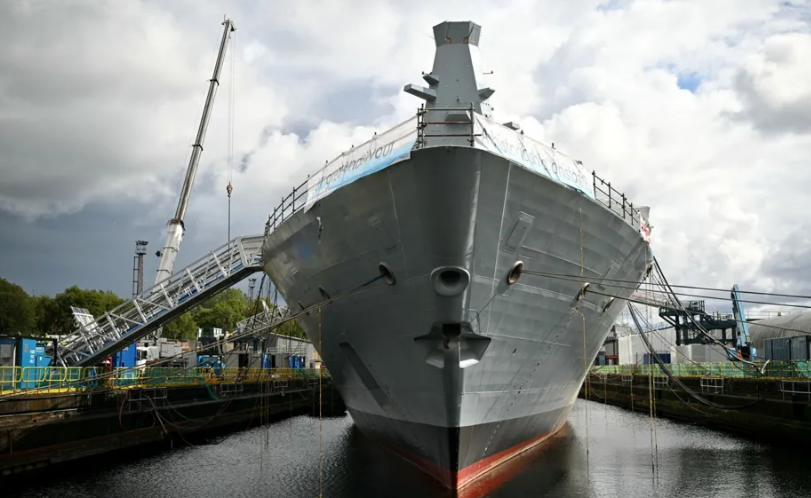
Scotland has emerged as one of the key beneficiaries of this renewed focus. Shipbuilding on the Clyde and the Forth, which had faced years of uncertainty, is now seeing a revival. The Royal Navy is expected to receive at least seven new ships by the end of the decade, including five Type 31 frigates from Rosyth and two Type 26 frigates from BAE Systems’ yards in Glasgow. The latter are part of an eight-ship order, with Norway confirming plans to purchase at least five Type 26 frigates in a deal worth £10 billion.
Production methods are also evolving. Automated welding and robotic painting at Rosyth have sharply reduced costs and increased efficiency, making British-built vessels more competitive on the export market. This shift towards faster, more interoperable ship designs has attracted potential interest from Denmark and Sweden.
Beyond shipbuilding, Scottish defence industries are expected to benefit from expanded orders in radar, submarine components, and missile technology. Scotland’s growing space sector — including satellite manufacturing in Glasgow and planned rocket launches from Shetland — could also play a role in future defence strategies.
Military planners are increasingly looking to civilian expertise, particularly in drone technology and artificial intelligence, which have proved decisive on the battlefield in Ukraine. Skills from offshore energy and gaming industries are being adapted for surveillance, counter-drone systems, and advanced battlefield technologies.
With rising global instability and new technological demands, the UK defence sector, and particularly Scotland’s, is experiencing an unprecedented resurgence — one that could reshape the country’s industrial base for years to come.
