


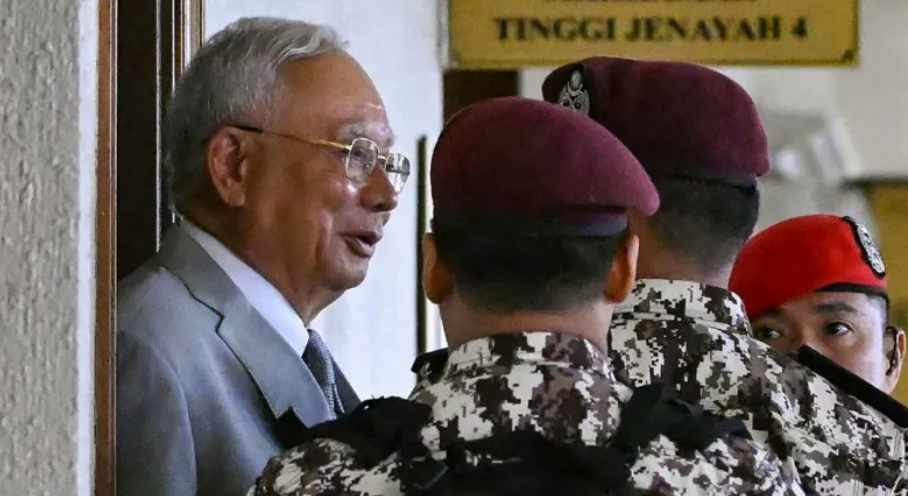
Former Malaysian Prime Minister Najib Razak has been sentenced to 15 years in prison for abuse of power and money laundering in his second major trial linked to the 1Malaysia Development Berhad (1MDB) scandal.
Najib, 72, was accused of misappropriating nearly 2.3 billion ringgit ($569 million; £422 million) from the state-owned wealth fund. On Friday, a judge in Putrajaya found him guilty of four counts of abuse of power and 21 counts of money laundering. Under Malaysian law, the sentences run concurrently.
This ruling comes after seven years of legal proceedings, during which 76 witnesses were called to testify. Najib is already serving a jail term from a separate 1MDB-related conviction. Earlier this week, a court rejected his request to serve the remainder of his sentence under house arrest.
Outside the court, dozens of supporters gathered to show solidarity, while his legal team maintains that Najib was misled by advisers, including financier Jho Low, who remains at large.
The 1MDB scandal first made international headlines a decade ago, implicating high-profile figures from Malaysia to global financial institutions. Investigators estimate that $4.5 billion was diverted from the fund into private accounts, including Najib’s.
In 2020, Najib was convicted in another 1MDB case over 42 million ringgit ($10 million; £7.7 million) transferred from SRC International, a former 1MDB unit. He received a 12-year prison term, which was halved last year. The latest conviction concerns a larger sum credited to his personal bank account in 2013. Najib claimed the funds were a donation from the late Saudi King Abdullah, a defence rejected by the judge.
Najib’s wife, Rosmah Mansor, was sentenced to ten years in prison in 2022 for bribery but is currently out on bail pending an appeal.
The scandal has had lasting political consequences. It contributed to Najib’s Barisan Nasional coalition losing the 2018 general election, ending six decades of uninterrupted rule. The recent verdicts have also exposed divisions within Malaysia’s ruling coalition, which includes Najib’s United Malays National Organisation (UMNO).
Prime Minister Anwar Ibrahim called for respect for the court’s decisions, urging all politicians to abide by the rule of law. Former lawmaker Tony Pua told the BBC that the verdict “sends a message” that even the country’s top leaders can be held accountable for corruption.
Yet, some experts warn that the fight against corruption in Malaysia remains incomplete. Cynthia Gabriel, founding director of the Center to Combat Corruption and Cronyism, said public institutions have not been strengthened sufficiently and warned that large-scale corruption could still occur. “Grand corruption continues in different forms,” she said, cautioning that Malaysia could face another 1MDB-style scandal in the future.
