


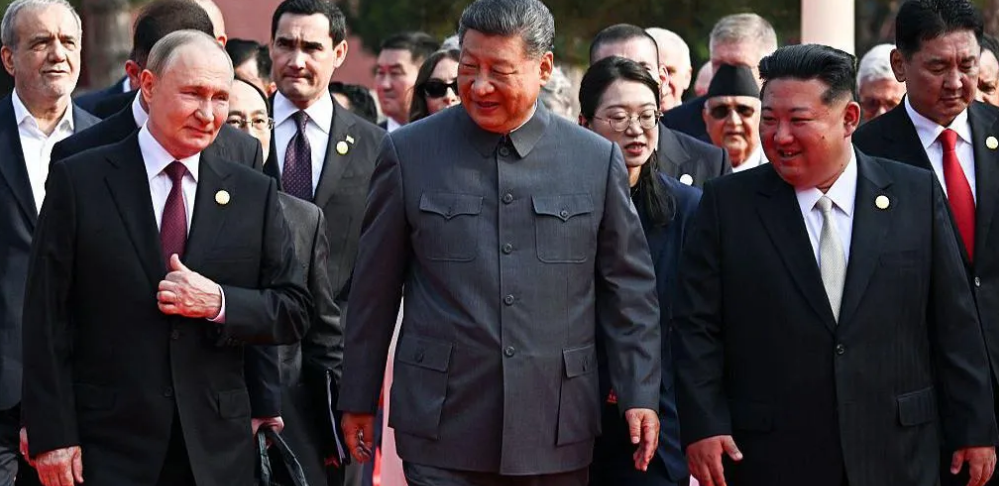
Chinese President Xi Jinping’s visit to North Korea this week comes at a moment of quiet tension between two neighbours bound by history but divided by shifting strategic interests. While Beijing and Pyongyang often describe their relationship as one “forged in blood” during the Korean War, years of mistrust and diverging alliances have complicated that narrative.
Xi arrived in Pyongyang on Monday, with analysts viewing the trip less as a symbolic gesture of friendship and more as an effort by China to reassert influence over a neighbour it considers both essential and unpredictable. For Beijing, North Korea remains a critical buffer state on its border, but also a source of instability due to its expanding nuclear programme.
China’s primary goal is to maintain regional stability without becoming entangled in crises driven by Pyongyang’s weapons development. At the same time, it is increasingly concerned about North Korea’s deepening cooperation with Russia, particularly after Pyongyang’s reported military support for Moscow in the war in Ukraine and the signing of a mutual defence pact between the two countries in 2024.
Western diplomatic sources suggest Beijing is wary of being sidelined as Moscow gains greater influence in Pyongyang. The shift has prompted China to recalibrate its approach, seeking to prevent Russia from becoming North Korea’s dominant external partner while preserving its own leverage.
Relations between Beijing and Pyongyang had visibly cooled in recent years, marked by limited high-level exchanges and muted diplomatic engagement, even as North Korea strengthened ties with Russia. That imbalance has raised concerns in China about losing strategic ground in Northeast Asia.
Xi’s outreach to North Korean leader Kim Jong Un, including previous meetings in Beijing and participation in regional events, reflects an attempt to restore structured engagement. However, analysts note that Beijing has carefully avoided endorsing North Korea’s nuclear ambitions, balancing diplomatic support with long-standing concerns over regional escalation.
China’s position remains complex. On one hand, North Korea acts as a buffer against US military presence in the region. On the other, its missile tests and nuclear advancements increase tensions and risk drawing stronger coordination between the United States, Japan, and South Korea.
Despite these concerns, Beijing continues to provide economic lifelines to Pyongyang. Trade between the two countries has grown significantly, and transport links, including rail services between Beijing and Pyongyang, have resumed after years of disruption. These measures are widely seen as part of China’s effort to keep North Korea economically dependent and within its sphere of influence.
Kim Jong Un, however, has pursued a more independent path in recent years, accelerating missile and nuclear development while broadening ties with Russia. Yet analysts say Pyongyang still relies heavily on China for trade, aid, and diplomatic backing.
The relationship between Xi and Kim remains defined by mutual necessity rather than trust. China seeks stability and control without confrontation, while North Korea pursues security guarantees without external constraint. For now, that uneasy balance continues to define one of Asia’s most complex partnerships.
