


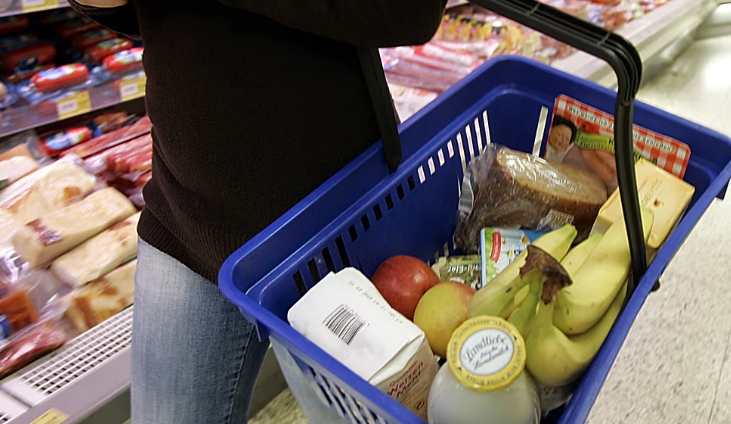
“Surveys show that most Europeans still expect grocery prices to rise this year, despite ECB expectations that food costs increases will cool.”
Despite projections from the European Central Bank that food price pressures will ease, many Europeans remain unconvinced, with a majority expecting grocery bills to continue rising through 2026. Consumer surveys suggest that recent years of sharp food inflation have left a lasting mark on household expectations, even as official data points to moderation.
According to Eurostat, prices for food and non-alcoholic beverages in the European Union are expected to rise by 3.3 percent in 2025, outpacing the overall inflation rate of 2.5 percent. Within the eurozone, the ECB anticipates that food inflation will slow as the effects of earlier global commodity price spikes and poor summer harvests fade, before settling slightly above 2 percent by late 2026. Yet consumer sentiment tells a different story.
Research by ING Consumer Research indicates that rising food prices remain one of the biggest worries for households across Europe. In a survey covering Germany, Spain, the Netherlands, Belgium, Poland and Romania, 58 percent of respondents said they expect grocery prices in their country to increase more rapidly over the next 12 months. Only 14 percent disagreed.
ING economist Thijs Geijer said the findings suggest that while inflation may be easing, many households are still influenced by the experience of recent price shocks. He noted that consumers may need to see a longer period of stable prices before their expectations begin to change.
Concerns are particularly strong in several countries. In Romania, nearly three-quarters of respondents, or 73 percent, expect grocery prices to rise faster. The figure stands at 66 percent in Belgium and 64 percent in the Netherlands. In Germany, 57 percent share this view, while Poland is close to evenly split, with 49 percent expecting further increases.
Spain stands out as an exception. Only 39 percent of Spanish respondents expect grocery prices to rise more rapidly. Analysts link this to Spain’s relatively strong economic performance, with growth of 2.8 percent in 2025, falling energy prices, and a robust labour market. OECD forecasts place Spain ahead of other large European economies, supported by solid job creation and real wage growth.
Expectations around purchasing power also remain subdued across much of Europe. Overall, 39 percent of respondents do not expect their purchasing power to improve in 2026, compared with 29 percent who are optimistic. Germany and Belgium show the highest levels of pessimism, while Spain again appears more positive, with a majority expecting gains.
The impact of food inflation varies across countries, partly because households in some nations spend a larger share of their income on food. Where food takes up more of the household budget, rising prices are felt more sharply, reinforcing concerns even as headline inflation slows.
