


The European Union is stepping up efforts to expand its global trade network, with EU Trade Commissioner Maroš Šefčovič arriving in Jakarta on Monday to advance negotiations on a long-awaited free trade deal with Indonesia.
“The intention certainly is to finalise political negotiations for an EU-Indonesia trade agreement,” said Commission deputy chief spokesperson Olof Gill, underlining Brussels’ determination to close the deal after years of talks.
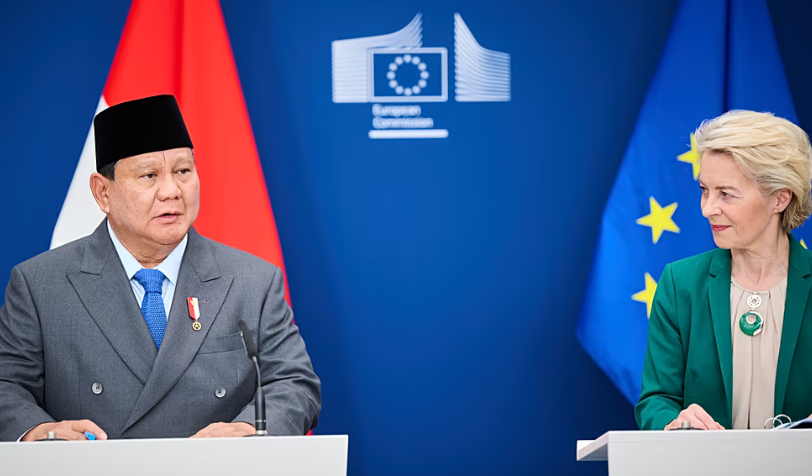
The push comes after European Commission President Ursula von der Leyen and Indonesian President Prabowo Subianto reached a political understanding in July, expressing confidence that a formal agreement could be concluded by September. If successful, the deal would give the EU access to a market of nearly 280 million people, strengthening its presence in Southeast Asia’s fast-growing economies.
Trade between the two partners is already substantial. In 2024, bilateral goods trade reached €27.3 billion, with EU exports worth €9.7 billion and imports from Indonesia valued at €17.5 billion. Indonesia was the EU’s fifth-largest trading partner in the Association of Southeast Asian Nations (ASEAN) last year, a ranking Brussels is eager to improve.
The drive to deepen economic ties in Asia reflects the EU’s broader strategy of trade diversification, which has taken on added urgency since relations with Washington soured over tariffs. Under a deal struck with the US in July, most European goods are now subject to 15% tariffs, while EU steel and aluminium continue to face levies as high as 50%.
Brussels has responded by accelerating talks with other regions. In December, it reached a political agreement with Mercosur nations – Argentina, Brazil, Paraguay and Uruguay – that, if ratified by member states and the European Parliament, would establish one of the world’s largest free trade areas, covering 780 million people.
Negotiations are also progressing with India, though officials acknowledge the talks are complex. Discussions accelerated this month with agriculture finally entering the agenda, but Šefčovič has cautioned that New Delhi remains a “tough” negotiating partner, making a swift resolution uncertain.
For the EU, securing a deal with Indonesia would represent not only access to a major new market but also a strategic foothold in the Indo-Pacific, a region increasingly central to global supply chains and economic growth. For Indonesia, Europe offers opportunities to diversify its export base and attract greater investment in areas such as renewable energy, digital services, and sustainable development.
The EU’s renewed trade push highlights its effort to adapt to shifting global dynamics, balancing longstanding transatlantic ties with new partnerships in emerging markets. Whether Brussels can finalise the Indonesian deal this year may be a key test of its ability to deliver on that strategy.
