


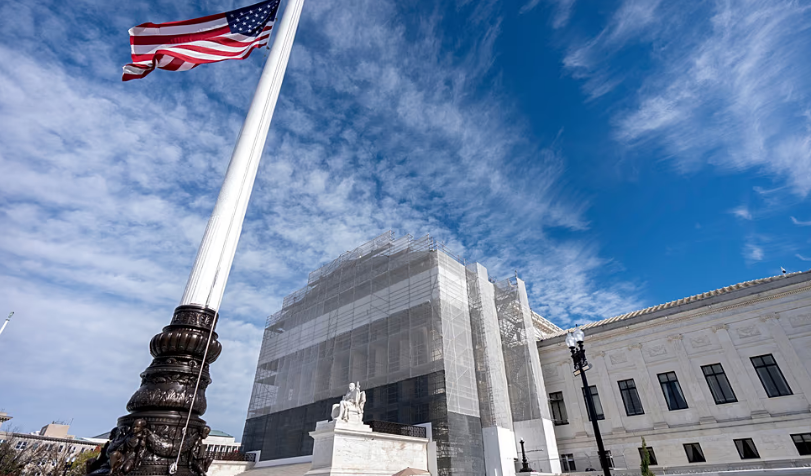
The US Supreme Court sharply questioned President Donald Trump’s broad use of tariffs on Wednesday, signalling scepticism toward his administration’s claim of sweeping authority to impose import duties under emergency powers. The case, which could reshape the balance of presidential and congressional trade powers, carries major economic implications for global markets and US manufacturing.
A majority of justices, including several conservatives, challenged the administration’s justification for tariffs imposed earlier this year on nearly every trading partner. The White House has defended the measures as essential to restoring domestic industry and correcting trade imbalances, but critics argue the president overstepped his authority.
Justice Amy Coney Barrett pressed the administration’s lawyers on the scope of the policy, asking, “Is it your contention that every country needed to be tariffed because of threats to the defence and industrial base? I mean, Spain? France?”
The dispute centres on the International Emergency Economic Powers Act (IEEPA) of 1977, a law granting presidents the authority to regulate trade during declared national emergencies. Trump invoked it earlier this year to levy tariffs ranging from 10% to 50% on goods from China, Mexico, Canada, and eventually most other nations, calling America’s trade deficit an “extraordinary and unusual threat.”
Solicitor General John Sauer, arguing for the administration, maintained that tariffs fall within the president’s power to regulate trade in emergencies. He warned that striking down the policy could expose the country to “ruthless trade retaliation” and “ruinous economic consequences.”
Several justices appeared unconvinced. Chief Justice John Roberts questioned whether the government’s interpretation would effectively allow the president to impose tariffs “on any product from any country in any amount for any length of time.” Justice Neil Gorsuch added that such authority could let Congress “abdicate all responsibility to regulate foreign commerce.”
Justice Sonia Sotomayor dismissed the administration’s distinction between tariffs and taxes, noting, “You want to say tariffs are not taxes, but that’s exactly what they are.”
The case could affect roughly $90 billion in tariffs collected so far, a figure that analysts say could rise to $1 trillion if the court delays a decision until June. A ruling against the administration might force refunds to businesses that paid import duties.
Outside the court, small business owners who joined the challenge voiced optimism. Sarah Wells, founder of a company that designs maternity-related products, said her business had suffered after paying $20,000 in unexpected tariffs. “I think they really understood the overreach that I believe the president has done under IEEPA,” she said.
The court’s decision is expected to shape not only Trump’s economic agenda but also the limits of executive power in trade policy for years to come.
