


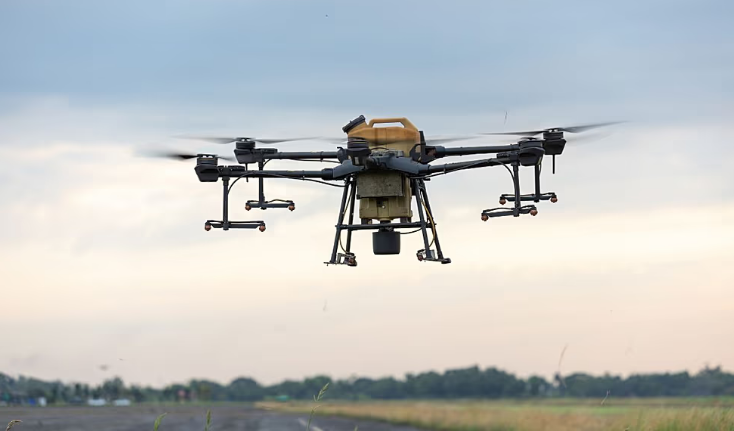
Drones are transforming industries worldwide, yet European agriculture continues to lag in unlocking their full potential due to strict regulatory frameworks. While the technology promises increased efficiency and safer operations, rules across the European Union keep innovation largely grounded.
Agricultural trade shows have evolved dramatically over the past two decades. Once dominated by tractors, combine harvesters, and ploughs, modern expos now resemble tech fairs, showcasing AI-driven software, livestock monitoring tools, and fleets of drones. Japan and China lead the production of agricultural drones, but European companies also hold a significant share of the market. Despite this, Europe applies a cautious approach to drone usage, limiting widespread adoption.
The European Union Aviation Safety Agency (EASA) governs drone operations under categories such as “Open” and “Specific.” Simple uses, like filming the countryside, fall under “Open” rules, while agricultural applications, particularly for pesticide spraying, are classified as “Specific” and face additional layers of regulation under Directive 2009/128/EC, which establishes rules for the sustainable use of pesticides. In practice, this makes drone spraying nearly impossible. Operators must obtain state-specific permits, and most approved pesticides cannot be applied aerially, restricting adoption to a handful of exceptions, such as steep vineyards where manual application is impractical.
By contrast, in the United States, drones can be used in agriculture with proper certifications, offering a more flexible framework for innovation. Europe, however, generally bans the practice unless no viable alternatives exist. Experts say this regulatory gap hinders efficiency gains and limits technological advancement.
Previous efforts to overhaul the rules have faced political obstacles. The European Commission’s Sustainable Use Directive proposed updates to allow drones to aid in precision agriculture, but it was rejected by the European Parliament and later withdrawn amid opposition from some member states and farmer groups. A late 2024 letter led by Portugal and supported by 14 other countries emphasized the potential benefits: “Given the technological advances in recent years in the field of precision farming tools, it is important to recognise the role to be played by drones, thus enabling a combined action between monitoring, data management and analysis and decision-making, thus contributing to the sustainability of the sector in environmental, economic and social terms and the sustainable use of pesticides.”
Proponents argue that drones can significantly improve pesticide efficiency while reducing exposure for farmworkers. Analysts say that adopting these technologies is essential for keeping European agriculture competitive with international trading partners and for advancing environmentally sustainable farming practices.
Despite the clear advantages, Europe’s cautious regulatory stance means drones remain an underutilized tool on the continent, leaving farmers to rely on traditional methods while countries like the US and China accelerate adoption. The challenge for policymakers is balancing safety and sustainability with innovation, ensuring Europe does not fall behind in modern agricultural technology.
