


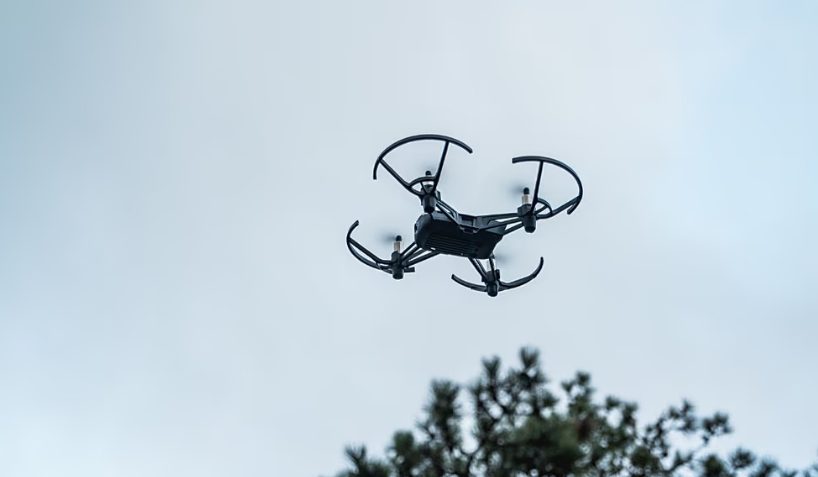
Two Baltic defence companies say their technology for a proposed “drone wall” is ready to be deployed, as momentum builds around efforts to strengthen Europe’s eastern border against aerial threats.
The plan, initially pushed by Baltic states, received political backing earlier this month when European Commission President Ursula von der Leyen called it “the bedrock of credible defence” during her September 10 State of the Union address. The initiative gained further traction after EU Defence Commissioner Andrius Kubilius said he would convene EU defence ministers to discuss coordinated action, following reports of Russian drones entering Polish airspace.
The “Baltic Drone Wall” is a joint security effort involving Poland, Finland, Estonia, Latvia and Lithuania. It aims to create a multilayered defensive shield against hostile drones across the region.
At the core of the project is the Eirshield system, developed by Estonia’s DefSecIntel in partnership with Latvian firm Origin Robotics. The platform integrates radars, cameras, and radio frequency detectors to track unmanned aircraft, assessing their direction and threat level before deciding whether to jam, intercept or disable them using counter-drones.
“This threat is very new, so we are designing systems specifically for it,” said Agris Kipurs, CEO of Origin Robotics. He noted that Eirshield was more cost-efficient than conventional air defence systems, costing “tens of thousands” of euros per use compared to millions for traditional missile interceptors.
According to DefSecIntel’s CEO Jaanus Tamm, the system has already been deployed in Ukraine, where it has been adapted to target low-flying drones. However, adjustments will be required before deployment in NATO territory, including measures suited for peacetime operations such as capturing drones with nets or disabling them without detonating payloads.
Despite growing interest, the EU Commission rejected a joint Estonian-Lithuanian funding request worth €12 million in August. Nevertheless, Baltic governments have committed national resources to the programme. Estonia has allocated €12 million over three years, Latvia has awarded €10 million in research contracts to local defence firms, and Lithuania has directed part of its EU funding for drone purchases toward anti-drone technology.
Tamm said he hopes the upcoming EU defence ministers’ meeting will deliver “a very concrete plan,” rather than another round of declarations. Demonstrations of the technology are expected in the coming weeks, though companies declined to say which governments may attend.
While the drone wall would not replace traditional missile defence systems, supporters argue it would provide an essential layer of protection against low-cost unmanned threats increasingly seen on Europe’s frontlines.
