


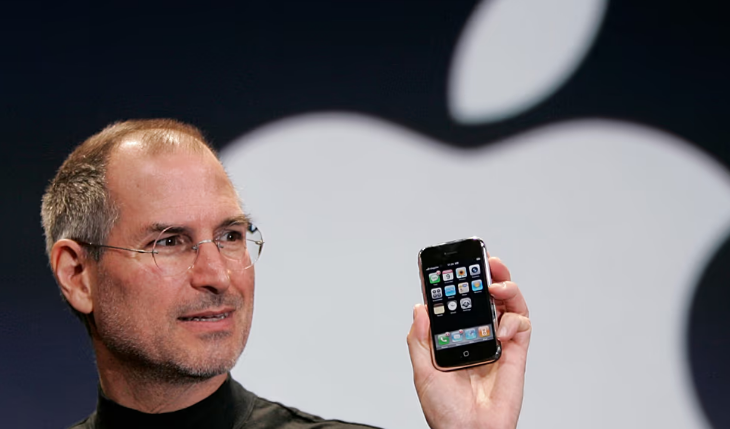
Apple celebrates its 50th anniversary on April 1. This is how the company’s long game paid off. From a scrappy startup in a California garage to one of the world’s most valuable companies, Apple has reached the milestone of 50 years while passing $4 trillion in market value.
The company was founded in 1976 by Steve Jobs and Steve Wozniak, with Ronald Wayne as a third co-founder who sold his shares early on. Their first product, the Apple I, lacked a keyboard and monitor but set the stage for innovation. The launch of the Apple II in 1977 brought widespread success and helped establish Apple as a leading computer manufacturer in the United States.
Apple faced early setbacks with products like the Apple Lisa in 1983, which failed commercially, and the original Macintosh, despite its famous 1984 Super Bowl advertisement highlighting rebellion against conformity. Internal conflicts led to Jobs leaving Apple, while Wozniak also departed. The company nearly went bankrupt in the mid-1990s due to competition from Microsoft PCs and failed products like the Newton tablet.
Jobs returned in 1997 after Apple acquired his company NeXT, taking the reins as interim CEO. At the time, Apple had just lost $50 million in a single quarter. He refocused the company on core products, leading to the launch of the iMac in 1998 and the Mac OS X operating system. The release of the iPod in 2001 established Apple as a trendsetter in consumer technology.
“Apple is never the first at bringing technology to the market, but when it does, it makes sure it looks good and works flawlessly,” said Tim Danton, editor-in-chief of PC Pro. The iPhone in 2007, the App Store, and the iPad in 2010 followed, cementing Apple’s reputation for design-led innovation.
After Jobs’ death in 2011, Tim Cook became CEO, guiding Apple into services and emerging technologies. The company now offers Apple TV+, Apple Music, and the Apple Vision Pro, a mixed-reality headset. Apple has also entered the AI space with iOS 18 and the iPhone 16 lineup, which features a dedicated chip for AI capabilities. Analyst Paolo Pescatore said Apple can afford a measured approach, focusing on user experience rather than rushing to be first.
Cook has navigated geopolitical tensions, slowing Chinese demand, and European regulations like the Digital Markets Act. While the Vision Pro has had slower-than-expected sales, experts remain confident. “Apple is brilliant at locking people into its ecosystem,” Danton said. He noted the company’s focus on privacy and long-term planning sets it apart from competitors.
Looking forward, Apple may expand into foldable devices, smart glasses, and other connected products. The company’s 50-year journey shows a pattern of carefully timed innovation, combining design, ecosystem control, and strategic patience to remain at the forefront of global technology.
