


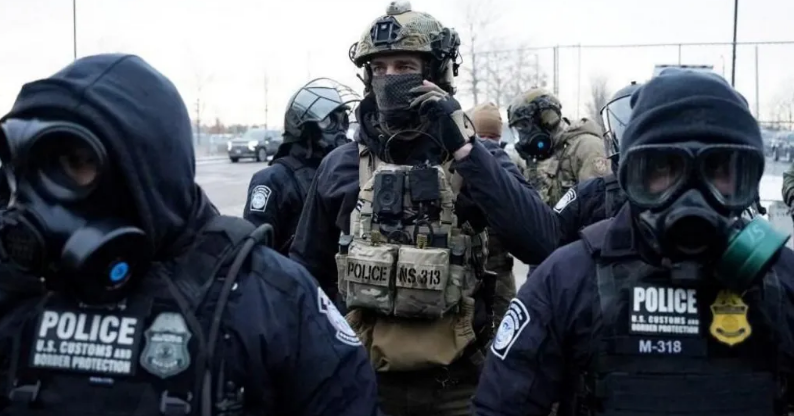
Around 1,500 US soldiers are on standby in Alaska for possible deployment to Minneapolis amid ongoing protests against Immigration and Customs Enforcement (ICE), a US defense official told CBS News, the BBC’s US partner. No decision has been made on whether President Donald Trump will authorize the use of active-duty military personnel.
The soldiers, part of the 11th Airborne Division based at Fort Wainwright, would be available if the president chooses to invoke the Insurrection Act, a rarely-used law that allows federal troops to assist in domestic law enforcement. Trump previously suggested he might use the act in response to unrest in Minneapolis.
Minnesota authorities have called on demonstrators to remain peaceful as the city prepares for further demonstrations. The protests intensified following the fatal shooting of US citizen Renee Good by an ICE agent earlier this month. Good, who was present as a legal observer of ICE activity on 7 January, has become a focal point for nationwide protests calling for justice.
On Friday, a US federal judge issued an order limiting the methods federal agents can use against protesters. Judge Katherine Menendez ruled that ICE agents cannot arrest or use pepper spray on “peaceful and unobstructive” demonstrations, including those simply monitoring ICE operations.
Governor Tim Walz has mobilized the state’s National Guard and placed it on alert. Additional law enforcement officers have been deployed in Minneapolis to manage crowds and maintain order ahead of planned demonstrations.
The protests in Minneapolis follow widespread action by ICE in the city, which has drawn attention from activists and civil rights organizations. Demonstrators have carried signs reading “Justice for Renee” and have called for accountability for the agent involved in Good’s death.
The Trump administration has described Good as a “domestic terrorist,” a characterization that has intensified tensions between federal authorities and local communities. City leaders and protest organizers have emphasized the importance of peaceful demonstration while seeking to ensure oversight of federal operations.
The situation has highlighted a rare intersection of federal military resources and domestic law enforcement, raising questions about the role of active-duty troops in civil matters. Defense officials have stressed that the troops remain on standby and that no deployment orders have been issued.
As Minneapolis braces for continued protests, authorities and federal agencies are balancing the enforcement of federal operations with judicial orders protecting demonstrators’ rights. The coming days will test the city’s capacity to maintain safety while addressing public outcry over Good’s death and ICE activities in the community.
