


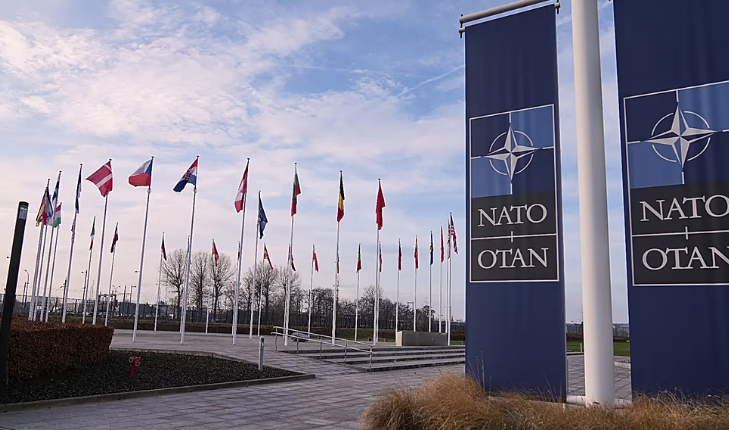
US President Donald Trump said in a newspaper interview published on Wednesday that he is considering pulling the United States out of NATO, calling the defence alliance a “paper tiger.” Speaking to the UK daily The Telegraph, Trump said, “I was never swayed by NATO. I always knew they were a paper tiger and Putin knows that too, by the way.”
Trump has criticised Western allies for not responding to his requests to assemble a naval force to reopen the Strait of Hormuz, a strategic waterway crippled by the ongoing Iran war. “Beyond not being there, it was actually hard to believe. And I didn’t do a big sale. I just said, ‘Hey,’ you know, I didn’t insist too much. I just think it should be automatic,” he added.
US Secretary of State Marco Rubio echoed concerns about NATO’s effectiveness, telling Fox News that Washington would “have to reexamine” its relationship with the alliance after the conflict ends. Rubio, a longtime NATO supporter, said the value of the alliance lay in European bases that allow the US military to project power globally. “If now we have reached a point where the NATO alliance means that we can’t use those bases to defend America’s interests, then NATO is a one-way street,” he said.
Rubio criticised European countries for restricting US military access to their bases. Earlier on Tuesday, Italy denied a US aircraft permission to land while en route to the Middle East for a combat mission, highlighting tensions within the alliance. “When we need them to allow us to use their military bases, their answer is ‘No?’ Then why are we in NATO? You have to ask that question,” Rubio said.
Defending the alliance, British Prime Minister Keir Starmer called NATO “the single most effective military alliance the world has ever seen” and emphasised the UK’s commitment. Meanwhile, Starmer said the UK would host a meeting of about 35 countries to discuss reopening the Strait of Hormuz. Foreign Secretary Yvette Cooper will lead discussions to explore diplomatic and political measures to restore freedom of navigation, protect ships and seafarers, and resume the movement of vital commodities.
“Following that meeting, we will also convene our military planners to look at how we can marshal our capabilities and make the strait accessible and safe after the fighting has stopped,” Starmer said. Countries that have signed statements supporting safe passage include Britain, France, Germany, Italy, Japan, and the Netherlands.
The Strait of Hormuz has been virtually closed since 28 February, when US-Israeli strikes sparked the current conflict, sending global oil and gas prices soaring. The UK-led talks aim to coordinate international efforts to reopen the strait safely, while NATO faces growing scrutiny from Washington over its perceived limitations in responding to the crisis.
