


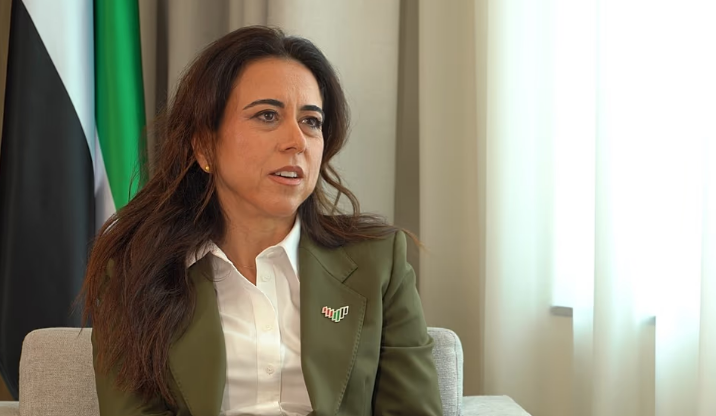
The United Arab Emirates has warned that Iran’s actions in the Strait of Hormuz risk disrupting global trade and energy supplies, urging the international community to ensure that the vital waterway remains open.
Lana Nusseibeh made the remarks during an interview with Euronews in Abu Dhabi, saying Iran must not be allowed to “hold the global economy hostage” through its actions in the strategically important shipping route.
The Strait of Hormuz is one of the world’s most important maritime corridors, carrying roughly one-fifth of global oil supplies. Any disruption to traffic through the narrow passage between Iran and Oman can have far-reaching consequences for international markets.
Nusseibeh warned that the impact would not be limited to energy prices. She said around 20 percent of the world’s energy passes through the strait and that interruptions could also affect global food security.
“If that is disrupted, it has an impact not only on global energy prices but on global food security and food supplies,” she said. Rising transport and energy costs could also increase everyday expenses, including food prices and fuel costs for consumers worldwide.
The warning comes as tensions in the Gulf have escalated in recent weeks, with the conflict involving Iran spreading across the region and raising concerns about the safety of shipping lanes and infrastructure.
Nusseibeh said the UAE remains committed to supporting global energy stability. The country, one of the world’s major oil exporters, continues to supply international markets while working to maintain stable trade flows.
“In terms of energy supply, we are a responsible and committed supplier to the global energy market,” she said, adding that the UAE will continue doing what it can to support stability in energy markets during the crisis.
The UAE also sees its role as a key logistics hub for global trade. Nusseibeh pointed to the country’s extensive transport links, noting that Dubai connects to more than 155 destinations worldwide through aviation and shipping networks.
Two weeks into the conflict, the UAE says it has faced repeated missile and drone attacks linked to the escalating tensions with Iran. Despite these challenges, authorities say life across the country has largely returned to normal.
“We’ve had an incredibly challenging 14 days,” Nusseibeh said, noting that the country has experienced one of the highest levels of attacks in the region since the conflict began. “But life has pretty much gone back to near normal in the UAE.”
She said the country’s immediate focus remains protecting residents and maintaining stability while avoiding a wider regional conflict. The UAE has invested for decades in defence systems, supply chain resilience and economic security to prepare for instability in the region.
“Our air defence systems are best in class,” Nusseibeh said, crediting the UAE Armed Forces with protecting communities during the attacks.
At the same time, she emphasised that the UAE continues to prioritise diplomacy and stability. While the country does not support further military escalation, it remains determined to defend its security and protect the wellbeing of both citizens and expatriate residents.
