


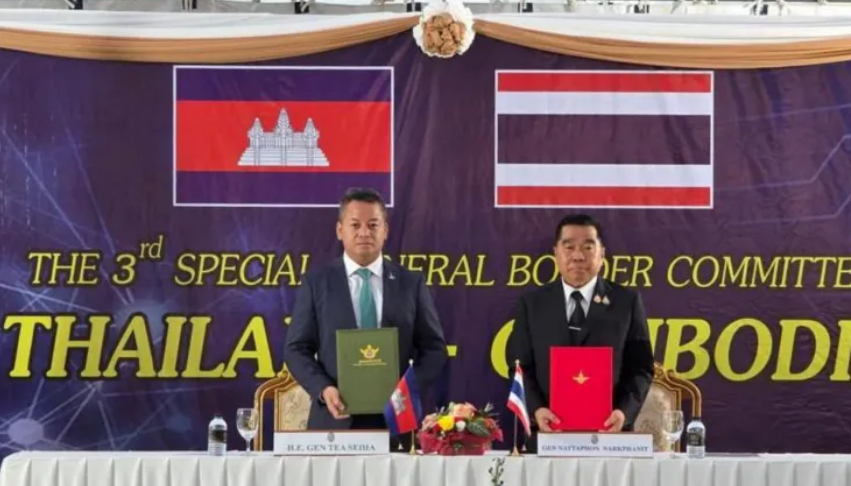
Thailand and Cambodia have reached a ceasefire along their disputed border, following nearly three weeks of deadly clashes that displaced almost one million people. The truce took effect at noon local time (05:00 GMT) on Saturday.
In a joint statement, the countries’ defence ministers agreed to freeze current front lines, halt reinforcements, and allow civilians to return home as soon as possible. The agreement also includes a commitment to remove landmines. Cambodia is set to release 18 soldiers held by Thailand since July once the ceasefire has been in place for 72 hours.
The breakthrough came after days of negotiations with diplomatic support from China and the United States. Thailand’s Defence Minister Natthaphon Narkphanit described the agreement as a test of Cambodia’s “sincerity” and warned that Thailand reserves the right to defend itself under international law if the truce is violated.
UN human rights chief Volker Türk expressed hope that the ceasefire will “pave the way” for lasting peace, while the European Union urged both countries to implement it in good faith.
The border dispute between Thailand and Cambodia stretches back more than a century, but tensions escalated in 2025 after incidents at disputed sites, including a clash in May that killed a Cambodian soldier and five days of intense fighting in July that left dozens of soldiers and civilians dead.
Earlier ceasefires this year collapsed amid renewed fighting. In December, Thai forces carried out air strikes on Cambodia, which the Thai military said targeted a fortified position after civilians had evacuated. Cambodia’s defence ministry described the strikes as “indiscriminate attacks” on civilian areas. Both sides blame each other for previous flare-ups.
Political and nationalist pressures add to the challenge of sustaining peace. Cambodia has suffered significant losses of personnel and military equipment, while Thai air strikes caused extensive damage in contested areas. These grievances may complicate long-term stability.
Thailand initially resisted the latest ceasefire, citing failures in previous agreements and concerns about Cambodia’s attempts to internationalise the conflict. Unlike the earlier “Kuala Lumpur Peace Accords” in October, brokered with Malaysian and US involvement, US President Donald Trump was not directly involved this time, though the State Department participated.
The agreement’s success will depend largely on the political will of both governments and their ability to enforce the truce on the ground. Authorities in both countries have stressed the priority of protecting civilians and reducing tensions, while observers hope that the ceasefire will provide a window for humanitarian assistance and dialogue.
