


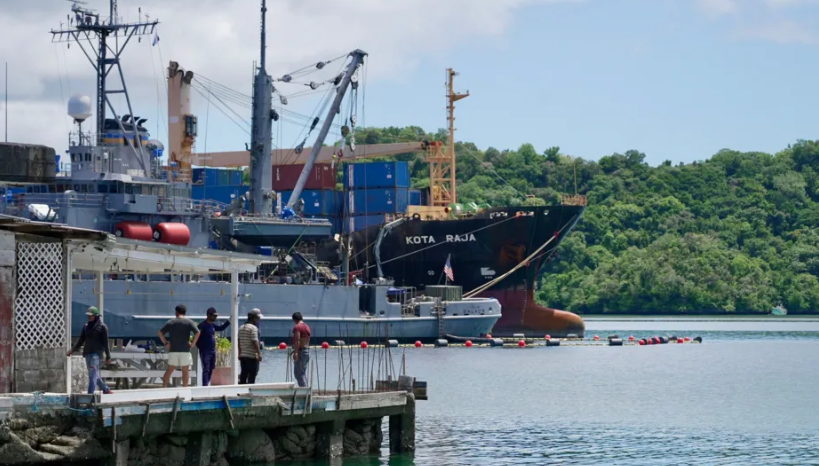
The waters around Palau, a small Pacific nation of fewer than 20,000 people, were once a bustling hub for tourism. Dive boats once crisscrossed the lagoons near Koror, Palau’s commercial centre, catering largely to Chinese visitors. In 2017, however, Chinese tour operators reportedly halted travel packages to the islands, sharply reducing visitor numbers and leaving local businesses struggling to recover.
Palauan officials say the move was part of a broader attempt by Beijing to shift the country away from recognising Taiwan, one of only a dozen nations that maintain formal diplomatic ties with Taipei. China, which asserts sovereignty over Taiwan under its “one China principle,” has repeatedly denied using tourism as political leverage.
The islands’ strategic location has made them a focal point for international attention. Palau sits on the “Second Island Chain,” which the United States views as crucial for containing Chinese military expansion in the western Pacific. Under the Compact of Free Association, Palau allows the US exclusive military access in exchange for extensive aid and the right for Palauan citizens to live and work in the United States. Washington is now strengthening its military presence, upgrading airstrips, radar systems, and the main port at Malakal Harbour.
Palauan President Surangel Whipps Jr. told the BBC that the nation’s geography makes it “the centre of any military activity” in the region. He has resisted Chinese overtures, including an alleged offer of a million tourists in exchange for severing ties with Taiwan. “If China wants a relationship with Palau, they can, but they cannot tell us we cannot have a relationship with Taiwan,” Whipps said.
Taiwan, meanwhile, has provided hands-on support to Palau, including medical teams, agricultural expertise, scholarships, and funding for local businesses. Officials describe the partnership as “solid as a rock,” yet they remain cautious as several Pacific nations have switched allegiance from Taipei to Beijing in recent years.
The influence of major powers extends beyond diplomacy. Chinese businesses have leased significant land near strategic US installations, raising security concerns. Palau’s national security advisors have warned that these properties could be converted into military sites if tensions escalate. Meanwhile, the islands have faced a rise in organised crime linked to Chinese syndicates, with some actors exploiting the absence of formal diplomatic ties between Palau and Beijing.
Residents are increasingly aware of the pressures around them. Many feel caught between superpower rivalries that could turn their homeland into a battleground. A recent petition calls on the US to clarify contingency plans to protect civilians in the event of conflict.
For many Palauans, the geopolitical contest is not an abstract issue but a daily reality, affecting tourism, security, and the islands’ very future. “We know what the geopolitics looks like between China and the US,” said one resident. “And we are scared our island will be destroyed by a war we don’t want to be part of.”
