


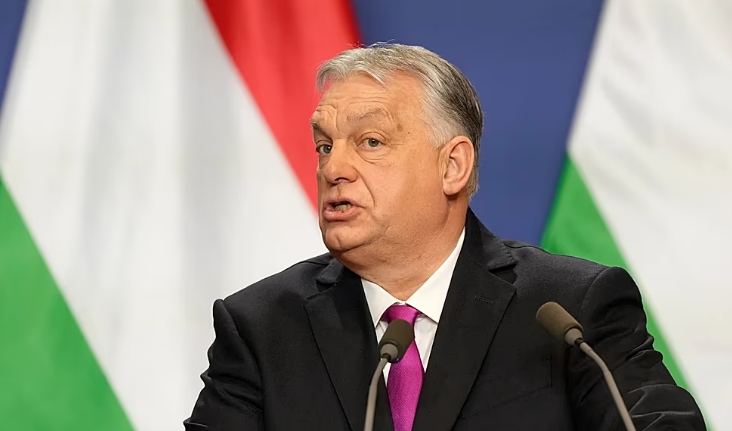
Hungary’s Prime Minister Viktor Orbán has raised the country’s security alert level and stepped up border checks as the conflict between the US, Israel, and Iran escalates, analysts say, using the crisis to strengthen his political position ahead of the 12 April parliamentary election.
Orbán has framed the Middle East conflict as a national security threat, linking it to potential risks for Hungary’s energy supply and broader economic stability. The prime minister convened his security cabinet last Saturday, shortly after US and Israeli strikes on Iran, and elevated the country’s terror alert by one level. On Thursday, he met with his anti-terrorism coordination committee and ordered additional checks on foreign nationals entering Hungary.
“Terrorist organisations with Middle Eastern origins have established themselves and grown stronger in Western Europe. We expect them to activate terrorist cells across Europe. We will protect the peace and security of Hungary in this situation,” Orbán said, announcing new measures including strengthened controls on foreign passenger traffic. He also ordered soldiers and police to safeguard Hungary’s key energy infrastructure, citing concerns about potential attacks from Ukraine.
Analysts say Orbán is leveraging the security narrative for political gain. Bulcsú Hunyadi, a political analyst at Hungary’s Political Capital Institute, said the heightened uncertainty created by the Iran conflict reinforces Orbán’s image as a guarantor of safety. “This can also be linked to the importance of Russian oil arriving via Ukraine, amid growing energy market uncertainty,” Hunyadi explained.
Orbán has also intensified a dispute with Ukraine over the Druzhba pipeline, Hungary’s critical energy artery that was damaged in a suspected Russian attack in late January and remains unrepaired. Hungary is currently blocking the European Union’s €90 billion loan package to Ukraine, demanding pipeline repairs first. Dániel Hegedűs, deputy director of the Institute for European Politics in Berlin, said the dispute could further bolster Orbán’s campaign. “The current developments fundamentally threaten Hungary’s energy security, and people may question whether it is in their interest for Ukraine to restart the transfer quickly,” he said.
Despite these moves, analysts warn that the crisis could backfire if energy prices remain high. Orbán’s main challenger, Péter Magyar of the opposition Tisza party, is campaigning on inflation and the rising cost of living. Hunyadi noted that short-term explanations blaming foreign powers may not shield the government if protective measures fail to deliver tangible results.
So far, Magyar’s campaign has remained focused on domestic issues and avoided foreign policy, leaving Orbán free to highlight security and energy concerns. With Fidesz trailing in polls behind Tisza, the prime minister’s emphasis on national safety and energy stability could be a decisive factor in the weeks leading up to the election.
Hungary’s parliamentary election on 12 April will determine whether Orbán retains his absolute majority, which he has held since 2010, or whether voters turn to his challengers amid concerns over living costs and energy security.
