


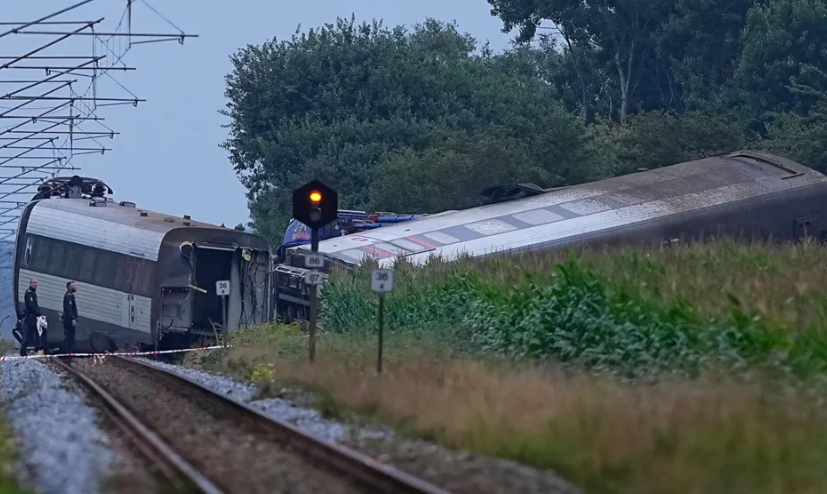
A passenger train collided with a slurry tanker and derailed in southern Denmark on Friday, leaving one person dead and dozens more injured, according to local authorities.
Police said the accident occurred between the towns of Tinglev and Kliplev in southern Jutland, near the German border. A 60-year-old woman was confirmed dead, while 27 others were injured, five of them seriously. Two of the seriously injured passengers remain in critical condition in hospital.
Emergency crews worked late into the night at the crash site. Police confirmed that cranes were being used to lift damaged carriages to ensure no additional victims were trapped inside. In total, 106 people were on board the train at the time of the accident.
Photographs published by Danish media showed at least one carriage lying on its side, with shaken passengers standing nearby along the railway tracks. The train had been carrying schoolchildren from Sønderborg, its planned destination. Authorities said none of the students or their two accompanying teachers sustained serious injuries, though the children have been offered counseling at their school.
The collision occurred at a level crossing, according to Denmark’s rail infrastructure agency Banedanmark. Local media reported that the train struck a slurry tanker used to transport farm waste, causing two carriages to derail.
Prime Minister Mette Frederiksen expressed her condolences to those affected. “My thoughts go out to the relatives, the many injured and everyone who is currently affected by the accident,” she said in a statement to public broadcaster DR. “I hope that everyone gets the best possible help and support.”
The state rail operator DSB suspended services along the line following the accident and said the route would remain closed until further notice. Investigators from Denmark’s Accident Investigation Board have been dispatched to the scene to determine the precise cause of the collision.
The crash has reignited concerns about safety at level crossings across Denmark. While such accidents are relatively rare, officials have acknowledged that rural areas remain vulnerable to collisions between trains and heavy agricultural vehicles.
As dawn broke on Saturday, rescue crews continued clearing debris from the site while engineers assessed the damage to the rail line. Local authorities said it could take several days before normal services resume.
The incident is one of the deadliest rail accidents in Denmark in recent years, highlighting the dangers posed by level crossings in regions where trains share routes with agricultural and industrial traffic.
