


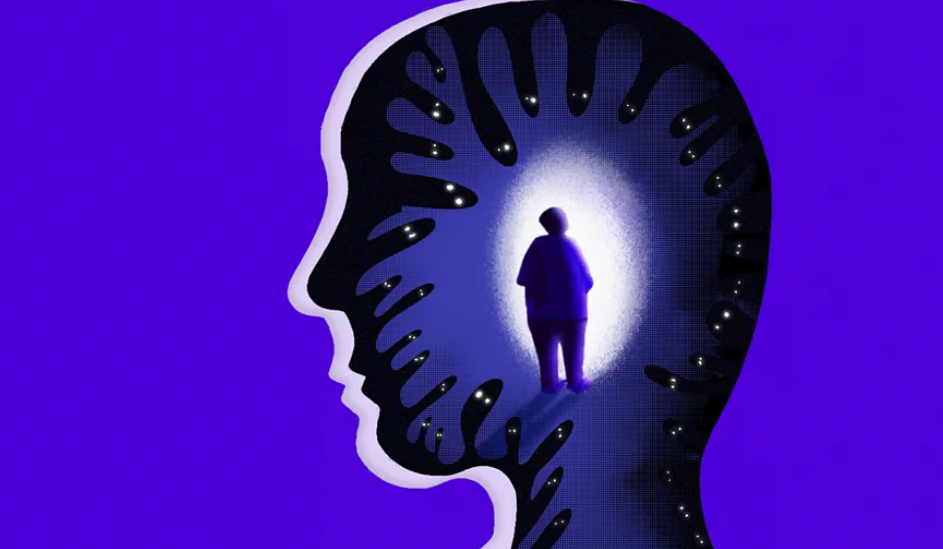
Fear is one of humanity’s oldest survival mechanisms, but for a rare few, it simply does not exist. Scientists are now studying individuals who, due to medical conditions or treatment, live without fear — and the risks and insights that come with it.
For British man Jordy Cernik, the absence of fear came unexpectedly. After undergoing surgery to remove his adrenal glands in order to treat Cushing’s syndrome, Cernik discovered he no longer experienced anxiety. The effect went further than expected: during a rollercoaster ride at Disneyland in 2012, he realised he felt no fear at all. Since then, he has skydived, abseiled down London’s Shard, and zip-wired off Newcastle’s Tyne Bridge — all without a racing heartbeat or surge of adrenaline.
Cernik’s case is unusual but not unique. Scientists have long studied people with Urbach-Wiethe disease, a rare genetic condition that damages the amygdala, the brain’s centre for processing fear. Fewer than 400 cases have been diagnosed worldwide. The most famous is “SM,” a woman in the United States who has been the subject of decades of research at the University of Iowa.
Researchers have shown SM horror films, taken her into haunted houses, and even exposed her to snakes and spiders. None of it elicited fear. Instead, she approached dangers with curiosity. “She had this overwhelming urge to interact with them,” said neuropsychologist Justin Feinstein, who has studied her since the early 2000s.
The absence of fear, however, comes with dangers. SM has been threatened at both knife and gunpoint after failing to recognise risky situations. She is also unusually comfortable with strangers, standing far closer than most people would tolerate.
Studies have revealed that the amygdala is critical for recognising external threats, such as predators or attackers, and for conditioning fear responses. Yet it does not account for all fear. In an experiment where SM inhaled carbon dioxide — mimicking suffocation — she experienced panic for the first time in decades. Without an amygdala to regulate her response, the fear was overwhelming.
Scientists now believe the brain has at least two pathways for fear. External threats are managed by the amygdala, which coordinates the body’s fight-or-flight response. Internal threats, like rising carbon dioxide levels, are sensed by the brainstem, which can trigger panic independently.
The findings highlight the complexity of fear — and the dangers of living without it. While individuals like Cernik and SM can face extreme challenges without hesitation, their inability to detect risk also leaves them vulnerable. For researchers, these rare cases offer invaluable clues about how fear shapes human behaviour, health, and survival.
