


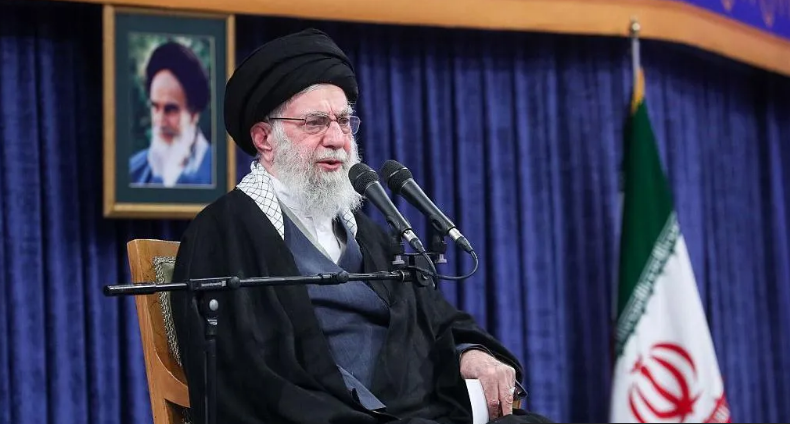
Iran’s supreme leader, Ayatollah Ali Khamenei, has for the first time publicly acknowledged that thousands of people were killed during recent protests, with some deaths described as “inhuman” and “savage.” The unrest, which began on December 28 over economic issues, has evolved into widespread calls for an end to Khamenei’s rule.
According to the US-based Iranian Human Rights Activists News Agency (HRANA), at least 3,090 people have died, though activist groups estimate the toll could be much higher. A near-total internet blackout has made independent verification extremely difficult. On Saturday, overall connectivity in Iran remained at about 2 percent of normal levels, according to cyber monitor NetBlocks.
In his address, Khamenei blamed the United States for the deaths and described President Donald Trump as a “criminal” whose goal is to “swallow Iran.” He warned that the US must be “held accountable” for its role in encouraging unrest. Khamenei’s remarks follow calls from Trump urging Iranian demonstrators to continue protesting and threatening military intervention if security forces continued killing protesters.
The Iranian government has labeled the demonstrations “riots” instigated by the country’s enemies. Videos showing security forces firing on demonstrators have been authenticated by both BBC Persian and BBC Verify. While recent days have seen fewer reports of unrest, ongoing restrictions on internet and communications mean conditions on the ground remain uncertain. A woman in Shiraz told BBC Persian that security forces were still patrolling on motorbikes, but “overall things have gone back to normal.”
The situation has heightened tensions with the United States. The US State Department said on Saturday that it had “heard reports that the Islamic Republic is preparing options to target American bases” and warned that any attack would be met with “a very, very powerful force.” President Trump has said he had been informed that “the killing in Iran has stopped” but has not ruled out military action.
Recent developments have included a partial reduction of US and UK personnel at the Al-Udeid air base in Qatar. Officials described the move as a “precautionary measure” in response to potential threats from Iran.
Khamenei’s speech signals a rare admission of the scale of the crackdown and reflects mounting domestic and international pressure. While the protests have slowed in recent days, restrictions on communication and ongoing security operations leave the true extent of the unrest unclear.
The US has yet to respond directly to Khamenei’s remarks, and the situation continues to unfold amid rising tensions between Tehran and Washington. The protests, one of the deadliest in recent Iranian history, highlight both the domestic challenges facing the government and the potential for escalating international conflict.
