


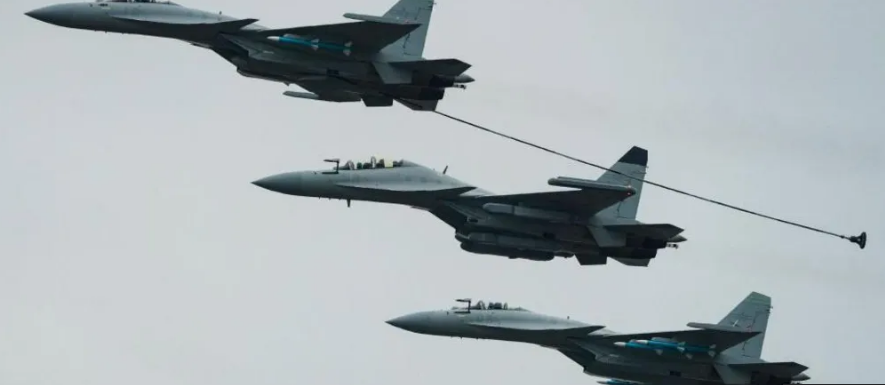
Japan has lodged a formal protest after Chinese fighter jets locked their radars onto Japanese aircraft near the southern Okinawa islands, escalating tensions between the two nations. Japanese officials reported that the incidents occurred twice on Saturday and involved Chinese J-15 fighter jets. Locking radar onto another aircraft is widely regarded as a hostile act, as it can signal a potential attack.
Japanese fighter jets were scrambled in response, but no injuries or damage were reported. Beijing, however, accused Tokyo of “harassing” its forces, asserting that the Chinese jets were conducting a routine training exercise. A Japanese defence ministry official said the purpose of the Chinese radar lock-ons was “unclear” and emphasized that the Japanese planes had not engaged in any provocative actions.
The radar incidents come amid a period of sharply deteriorating diplomatic relations. Tensions intensified last month after Japanese Prime Minister Sanae Takaichi suggested that Tokyo could consider military action if Beijing attacked Taiwan. China views Taiwan as part of its territory and has repeatedly warned that it could use force to achieve “reunification.”
The ongoing disputes have led to increasingly hostile rhetoric between the two nations, affecting economic and cultural exchanges. Last week, Japan and China’s coast guards issued conflicting accounts of a confrontation near disputed islands in the East China Sea.
The Japanese Ministry of Defence reported that the J-15 jets, launched from China’s Liaoning aircraft carrier, locked onto Japanese planes at 16:32 local time and again at 18:37. Prime Minister Takaichi condemned the actions, saying, “It is extremely regrettable. Japan has strongly protested to the Chinese side, and we firmly requested measures to prevent recurrence. We will respond calmly and resolutely.”
China dismissed Japan’s claims as “completely inconsistent with the facts” and urged Tokyo to “immediately stop slandering and smearing” its forces. Beijing noted that the training exercises had been announced in advance.
These incidents follow a suspected Chinese drone sighting near Yonaguni, an island close to Taiwan, which prompted Japan to scramble aircraft two weeks ago. Japan has also announced plans to deploy missiles on Yonaguni, a move that has further angered Beijing.
Heightened tensions over the past month have led China to advise its citizens against traveling to Japan. Beijing has also banned seafood imports from Japan and suspended the screening of popular Japanese films, signaling a growing rift that extends beyond military confrontations.
Analysts warn that the escalating incidents in the East China Sea could increase the risk of miscalculation between the two powers, as both countries continue to assert their military presence in the region.
