


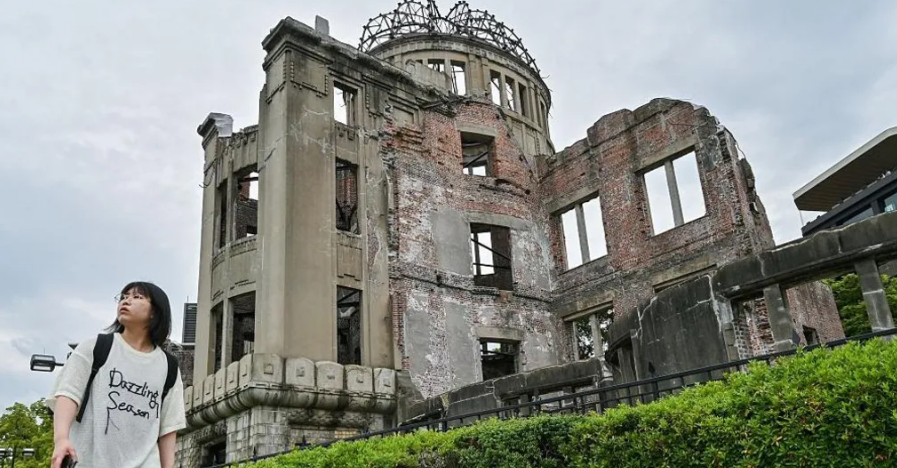
Japanese officials and survivors of the atomic bombings of Hiroshima and Nagasaki have condemned former U.S. President Donald Trump for likening recent American strikes on Iran to the 1945 nuclear attacks that ended World War II.
Speaking to reporters on Wednesday, Trump defended the effectiveness of the Iran strikes, saying, “That hit ended the war. I don’t want to use an example of Hiroshima, I don’t want to use an example of Nagasaki, but that was essentially the same thing.”
His remarks drew swift and emotional backlash from Japan, the only country to have suffered nuclear attacks. About 140,000 people were killed when the United States dropped atomic bombs on Hiroshima and Nagasaki in August 1945. Survivors, known as hibakusha, continue to suffer from long-term health effects and psychological trauma.
“If the comment justifies the dropping of the atomic bomb, it is extremely regrettable for us as a city that was bombed,” said Nagasaki Mayor Shiro Suzuki.
Atomic bomb survivors and peace groups also expressed outrage. Mimaki Toshiyuki, a survivor and co-chair of the Nobel Peace Prize-winning group Nihon Hidankyo, told public broadcaster NHK that Trump’s remarks were “unacceptable.” Fellow survivor Teruko Yokoyama said, “I’m really disappointed. All I have is anger,” in an interview with Kyodo News.
In Hiroshima, survivors staged a protest on Thursday, calling on Trump to retract his statement. Local lawmakers also passed a resolution rejecting any justification of the atomic bombings and urging peaceful resolution of international conflicts.
Asked if Japan would file an official protest, Chief Cabinet Secretary Hayashi Yoshimasa said Tokyo had consistently communicated its position to Washington on the use of nuclear weapons.
Trump’s comments followed a leaked U.S. intelligence assessment that questioned the long-term impact of the strikes on Iran’s nuclear program. While the report suggested the program had only been delayed by months, Trump insisted the operation had “obliterated” Iran’s capabilities, a view echoed by CIA Director John Ratcliffe.
The controversy has reignited painful memories in Japan, where the legacy of nuclear warfare remains deeply ingrained. In Hiroshima, a symbolic peace flame has burned continuously since the 1960s, and a clock at the Hiroshima Peace Memorial Museum tracks the days since the last nuclear attack.
Foreign dignitaries visiting Hiroshima are traditionally asked to fold paper cranes, a gesture of solidarity and commitment to global peace.
