


Iran launched a new wave of missile and drone strikes across the الخليج region, targeting ships in the Strait of Hormuz and sites in the United Arab Emirates, as tensions with the United States and its allies intensified.
According to regional reports, Iran also issued a navigation map outlining new transit rules for vessels passing through the waterway. The plan, announced by the Islamic Revolutionary Guard Corps, is seen as an attempt to expand its monitoring and control beyond the strait to nearby areas, including routes leading to Fujairah, a key hub for oil exports.
The move brought Iranian forces close to confrontation with US military units operating in the المنطقة. The escalation followed the launch of “Project Freedom,” an initiative announced by Donald Trump aimed at ensuring safe passage for commercial ships through the strait.
US officials said clashes had already occurred. Admiral Brad Cooper, head of United States Central Command, stated that American helicopters had destroyed six Iranian boats that were approaching civilian vessels. Trump also said Iranian fast boats had been sunk during the confrontation.
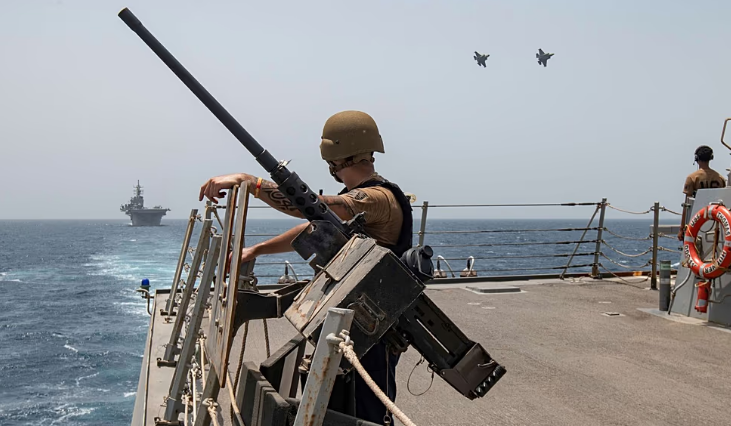
US forces have since begun clearing a navigation corridor in the strait and establishing what officials described as a defensive shield, using aircraft and naval assets to protect commercial shipping.
Iran’s strikes on targets in the UAE, including Fujairah, have drawn condemnation from Gulf nations and the wider international community. Authorities in the UAE reported intercepting multiple incoming threats, including ballistic and cruise missiles as well as drones.
European leaders attending a summit in Yerevan also criticised Tehran’s actions, expressing support for the UAE and warning against further escalation in the Persian Gulf.
Tensions were further inflamed by remarks from Hossein Shariatmadari, who suggested that European military bases supporting US operations could become targets. In comments published in the conservative Kayhan newspaper, he warned that Europe would be vulnerable in the event of a broader conflict.
Iranian officials continued to signal defiance. Mohammad Bagher Ghalibaf said the current situation had created a new balance of power in the strait and argued that actions by the United States and its allies had destabilised shipping and energy flows.
Meanwhile, reports from داخل إيران pointed to further unrest. A fire broke out at Dayyer port in Bushehr province, according to local authorities, while unconfirmed accounts on social media described explosions in Bandar Abbas and Qeshm Island. These claims could not be independently verified.
The latest developments underline the fragile security situation in one of the world’s most important energy corridors, with global markets and shipping routes increasingly exposed to the risk of further escalation.
