


Former Pakistan prime minister Imran Khan has only 15 percent vision remaining in his right eye, his lawyers told the country’s Supreme Court, raising concerns over delayed medical care in prison. Khan’s lawyer, Salman Safdar, who was allowed to visit him this week, said the former cricketer began experiencing blurred and hazy vision three to four months ago.
According to Safdar, Khan reported his symptoms to the jail superintendent, but no adequate medical intervention was provided beyond basic eye drops. Khan’s condition was later diagnosed as a blood clot in his right eye, which has caused significant damage and left him with limited sight.
Safdar submitted a detailed report on Tuesday to Chief Justice Yahya Afridi and Justice Shahid Bilal Hasan, describing Khan as “visibly perturbed and deeply distressed” by the loss of vision and the lack of specialised treatment. The lawyer requested that Khan be examined by a team of expert ophthalmologists, granted better prison conditions, and allowed access to his family.
The Supreme Court has since ruled that Khan should be allowed to consult with his personal physicians while in Adiala Jail and be permitted to telephone his sons, Kasim and Sulaiman.
Khan’s current prison conditions were also described in Safdar’s report. His cell contains basic furniture, 100 books, two dumbbells, a prayer mat, and a television that does not function. During summer, the room reportedly becomes hot and humid, with insects and mosquitoes entering regularly. Khan has suffered food poisoning two to three times during the hotter months.
He is assigned a mushaqati, a fellow prisoner who assists with cleaning and washing, and is permitted to walk on a 12-by-30-foot lawn during daytime hours. One interior minister previously described Khan as “the most privileged prisoner in Pakistan,” noting that he has access to gym equipment and a cook.
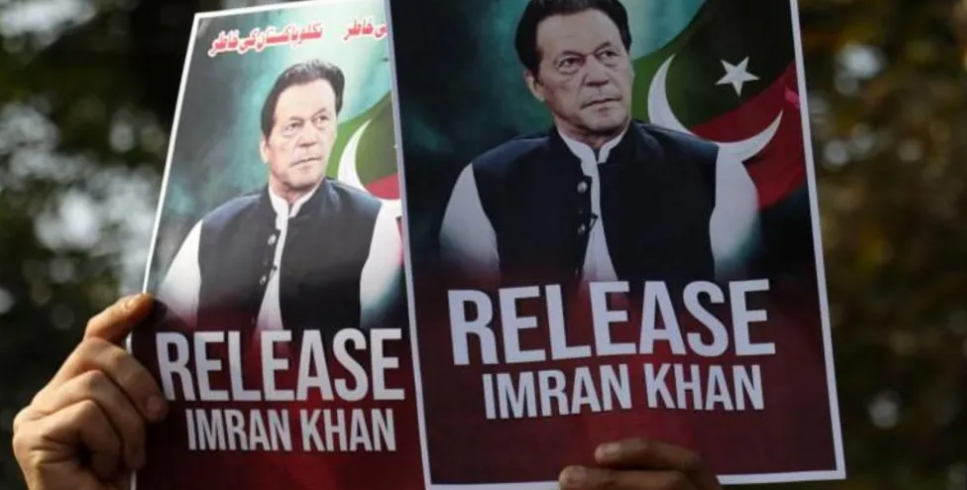
Khan, who captained the Pakistan national cricket team and served as prime minister from 2018 to 2022, was known for infrastructure projects, free healthcare programs, and renewable energy initiatives during his tenure. He was imprisoned in August 2023 and faces charges in more than 100 cases, ranging from leaking state secrets to selling state gifts, which he and his supporters claim are politically motivated.
His imprisonment triggered large-scale protests across Pakistan, which were met with a government crackdown. Thousands of demonstrators were arrested, and many were injured during clashes with law enforcement.
Authorities previously confirmed that Khan underwent a 20-minute medical procedure on 24 January at Islamabad’s PIMS hospital. Minister Ata Tarar said at the time that Khan was “fine and healthy,” but Safdar’s report paints a far graver picture, highlighting concerns over delays in timely and specialised medical treatment within the prison system.
The Supreme Court’s order now allows Khan access to personal medical care and communication with family, while questions remain over the adequacy of healthcare and living conditions for the former prime minister.
