


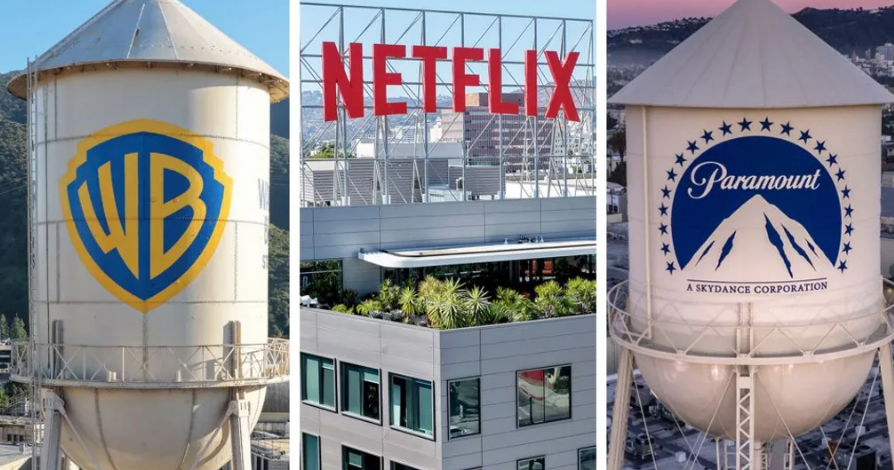
Hollywood is grappling with uncertainty as Warner Bros, one of the industry’s most iconic studios, faces a potential sale. The fate of the 102-year-old company has stirred concern among actors, producers, and crews who warn of further job losses amid a struggling entertainment landscape.
Warner Bros, behind legendary films including Casablanca, Goodfellas, Batman, and Harry Potter, has been weakened by years of production slumps and corporate mergers. Its pending sale, either as a whole to Netflix or partially to Paramount Skydance, has prompted debate across the industry. Sources say the choices present stark contrasts: a tech giant blamed for disrupting movie theatres or billionaires closely tied to former US President Donald Trump.
Netflix’s bid would secure the studio’s crown jewels, including HBO and Warner Bros’ extensive film and TV archives, while leaving networks like CNN, TNT Sports, and Discovery for potential separate buyers. Paramount Skydance, meanwhile, has made a $108 billion hostile takeover offer backed by investors from Saudi Arabia, Abu Dhabi, Qatar, and Jared Kushner’s fund, raising concerns about potential censorship and government influence.
Hollywood insiders are critical of Warner Bros Discovery CEO David Zaslav, who earned $51.9 million last year as the studio lost $11 billion. Many compare his leadership to the fictional character Gordon Gekko from Wall Street. “Zaslav is just Gordon Gekko—he came in, broke it, and sold it all,” said a producer working on the lot. “He said I will make all shareholders rich and who cares what the history of this place is.” Warner Bros rejected these characterisations, noting achievements in relaunching the DC Universe, global streaming expansion, and profitable operations.
The studio’s decline follows years of disruption. The pandemic halted productions in 2023, and subsequent labor strikes slowed the industry’s recovery. Skydance Media’s earlier acquisition of Paramount also led to thousands of job losses, contributing to anxiety over Warner Bros’ future.
Reactions to the potential buyers are mixed. Some film workers see Netflix as a preferable option, citing the company’s support for theatrical releases and its restoration of the historic Egyptian Theatre on Hollywood Boulevard. “I think it’s a good sign,” said sound technician John Evans, referencing Netflix’s $70 million renovation of the 1922 cinema. Others warn that Netflix’s streaming-first approach has already challenged theatres nationwide. “This is a company openly, proudly saying theatres aren’t necessary anymore. That’s scary. It’s a nightmare,” said a US film exhibitor.
Despite the uncertainty, productions continue on the Warner Bros lot. Crews remain focused on developing new shows while preparing for the broader changes sweeping the industry. Many fear that as studios consolidate and billionaires control more of Hollywood, opportunities for creators will shrink. “It’s sad to lose a studio because it means it will be even harder to get shows made and sold,” a producer said. “But if you make good stuff, you make good stuff.”
The sale of Warner Bros marks a significant moment in Hollywood, highlighting tensions between legacy studios, tech disruptors, and billionaire investors, all while workers struggle to adapt to an evolving industry.
