


Residents across the Gulf region now live in the harrowing reality of thunderous explosions overhead. As the Iran war shows no sign of slowing down, authorities are educating people on how to respond and stay safe amid ongoing aerial attacks.
Abrupt explosions, flashes in the sky, and emergency alerts on phones have become a common occurrence in Qatar, the UAE, Saudi Arabia, Kuwait, Bahrain, and Oman following Iranian strikes in response to US-Israeli operations. For residents and tourists alike, this new reality, once unimaginable, has forced rapid adaptation to safety guidelines issued by local authorities.
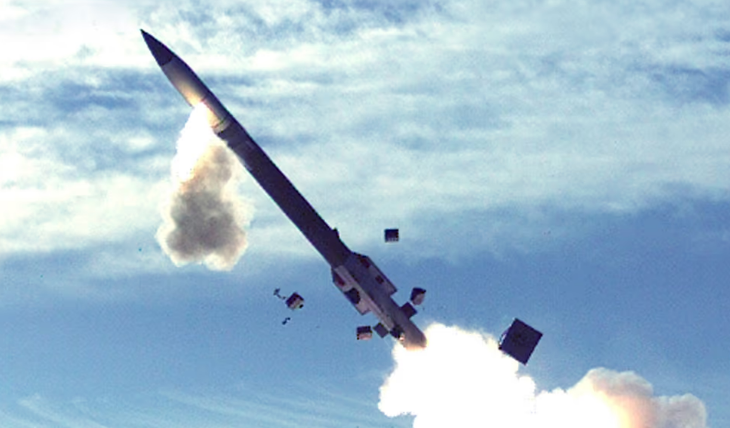
Media outlets in the UAE and Qatar have published visual and informative guides explaining the situation. The loud “booms” heard across the region, officials say, are the sounds of air defence systems intercepting incoming missiles and drones. Depending on location, these explosions can shake buildings and create shockwaves, but they indicate that defence systems are successfully neutralizing threats.
The Gulf states operate some of the world’s most advanced air defence networks. Long-range Patriot missile batteries, along with THAAD and other systems, are designed to detect and destroy threats before they reach populated areas. Interceptions typically occur several kilometres above the ground, allowing civilians to remain largely safe despite the visible flashes and loud detonations.
Ballistic missiles, capable of speeds up to eight times the speed of sound, travel hundreds of kilometres in minutes. Cruise missiles, in contrast, fly lower at subsonic speeds, often to evade radar. Missile sizes vary, with short- and medium-range ballistic missiles reaching 8 to 12 metres in length, while cruise missiles are smaller, typically five to seven metres.
Iran’s drone fleet adds another layer of complexity. Shahed-type drones, including the Shahed-136 and Shahed-131, can carry explosives over distances up to 2,000 kilometres and fly at speeds of 150 to 190 kilometres per hour. Mohajer-6 drones, larger and capable of long-duration surveillance, can also carry guided munitions. Because these drones are smaller and cheaper than missiles, intercepting every threat is challenging, though layered defence systems provide multiple opportunities to neutralize them.
Modern detection relies on a combination of satellite early-warning systems, long-range radar, and regional defence networks. Systems such as the AN/TPY-2 X-band radar can track ballistic missiles up to 1,000 kilometres away. Cruise missiles and drones are harder to detect due to their low flight paths, requiring close coordination between high- and low-altitude interceptors.
For residents, the flashes and booms in the night sky serve as a constant reminder of the invisible high-speed defensive battles unfolding above them. Authorities continue to stress that these noises indicate functioning systems and the safety of people on the ground.
